
Case Study: Active Slab Leak Remained After Complete Home Repipe
Initial Complaint
The property owner was notified by the local water utility of unusually high water consumption. After verifying the concern through meter testing, the customer confirmed that water was continuously passing through the meter, indicating an active leak somewhere on the property.
The customer initially believed the leak was located outside the home because the entire residence had previously undergone a complete repipe by a licensed plumbing contractor. Based on the customer’s understanding, all domestic water piping had been replaced overhead, eliminating the original underground piping system.
Investigation Process
Upon arrival, a comprehensive leak detection investigation was performed.
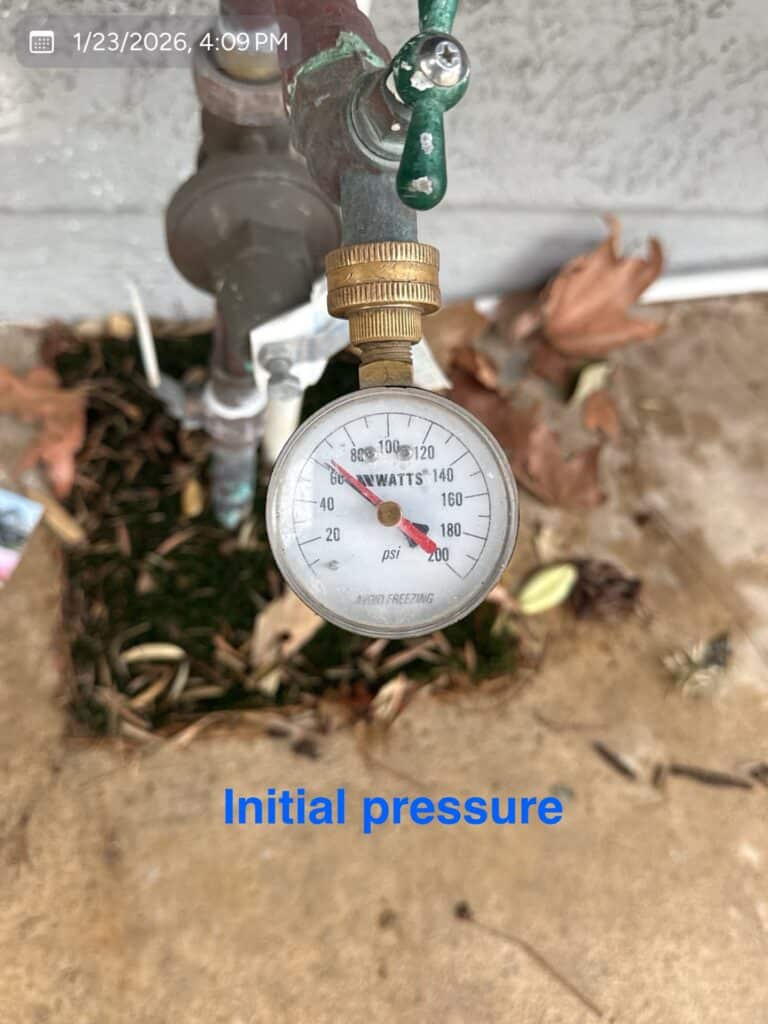
Hydrostatic pressure testing was conducted to isolate the source of water loss. Testing confirmed that the leak was not located on the exterior service line and was instead occurring within the home’s plumbing system.
All accessible fixtures were inspected, and every available angle stop throughout the property was shut off individually. Despite these isolation efforts, the water loss persisted.
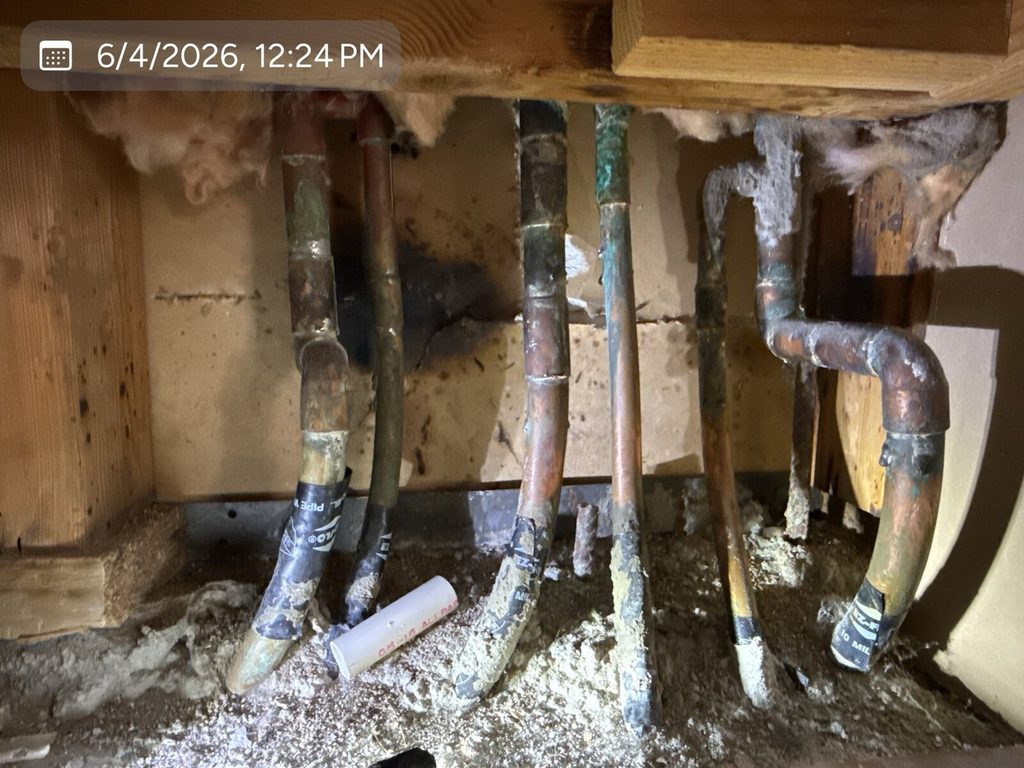
The customer then provided access to the attic, where all visible overhead repipe lines were inspected. The customer also provided photographs documenting the previously completed repipe work. Based on the visible installation, all indications suggested that the plumbing system had been successfully rerouted overhead.
At this stage, the investigation became unusually challenging. No visible leaks were present, water consumption remained active, and there appeared to be no accessible fixture, appliance, or overhead piping section responsible for the loss.
Acoustic Testing
Advanced ultrasonic leak detection equipment was utilized to inspect all accessible fixtures and plumbing connections throughout the residence.
Despite extensive acoustic testing, no leak signature could be identified.
This result was unusual because active pressurized leaks are often detectable through fixture connections or accessible plumbing pathways. The absence of detectable leak noise suggested that the leak was isolated within a section of plumbing that no longer had direct fixture access.
Critical Discovery
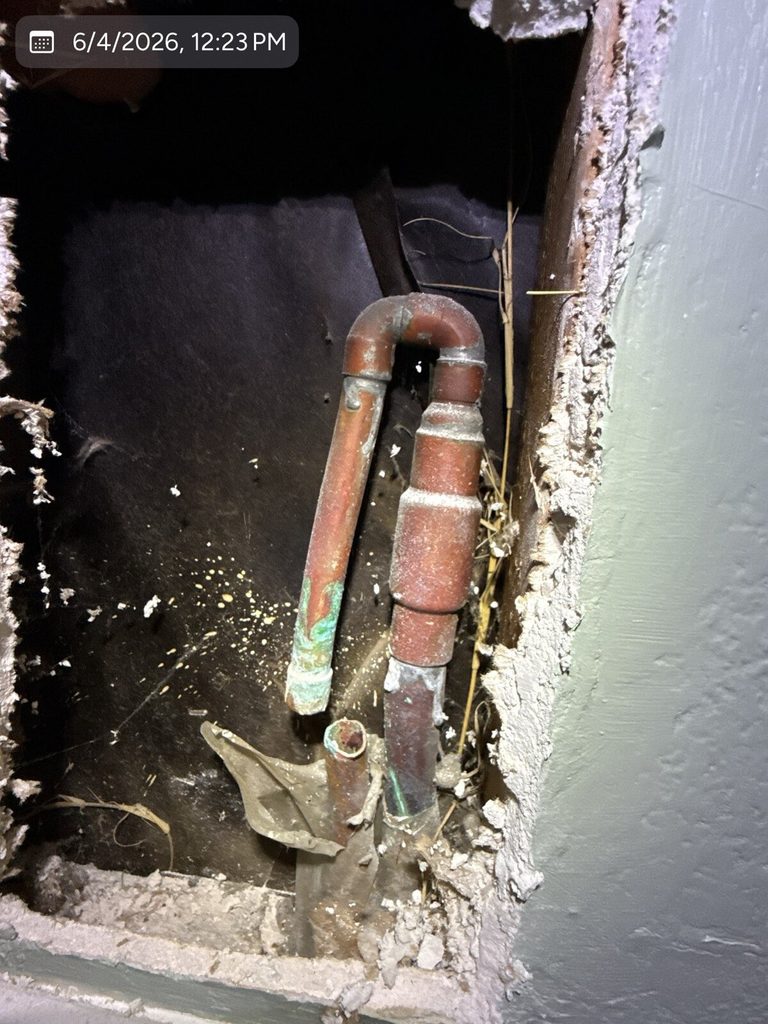
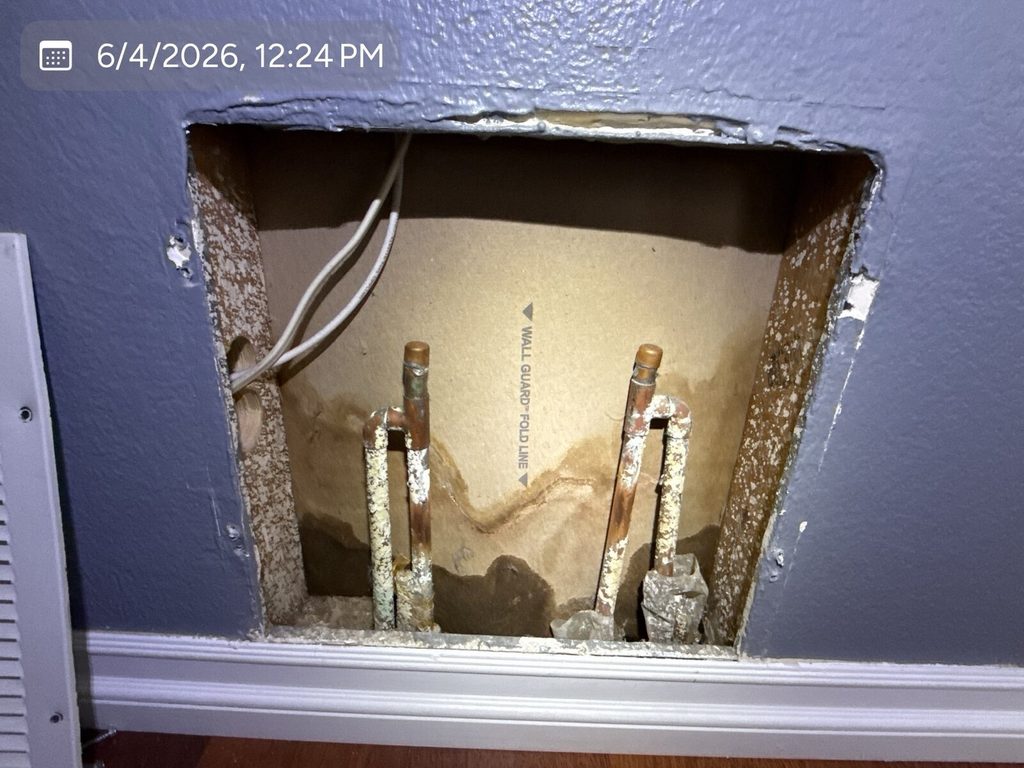
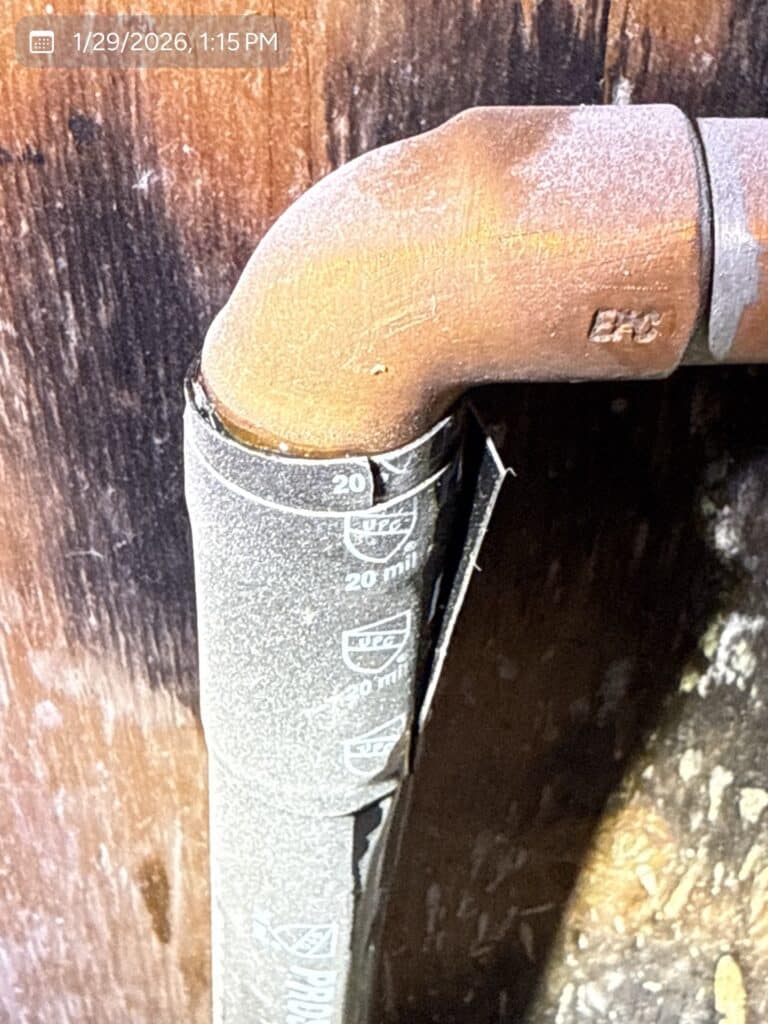
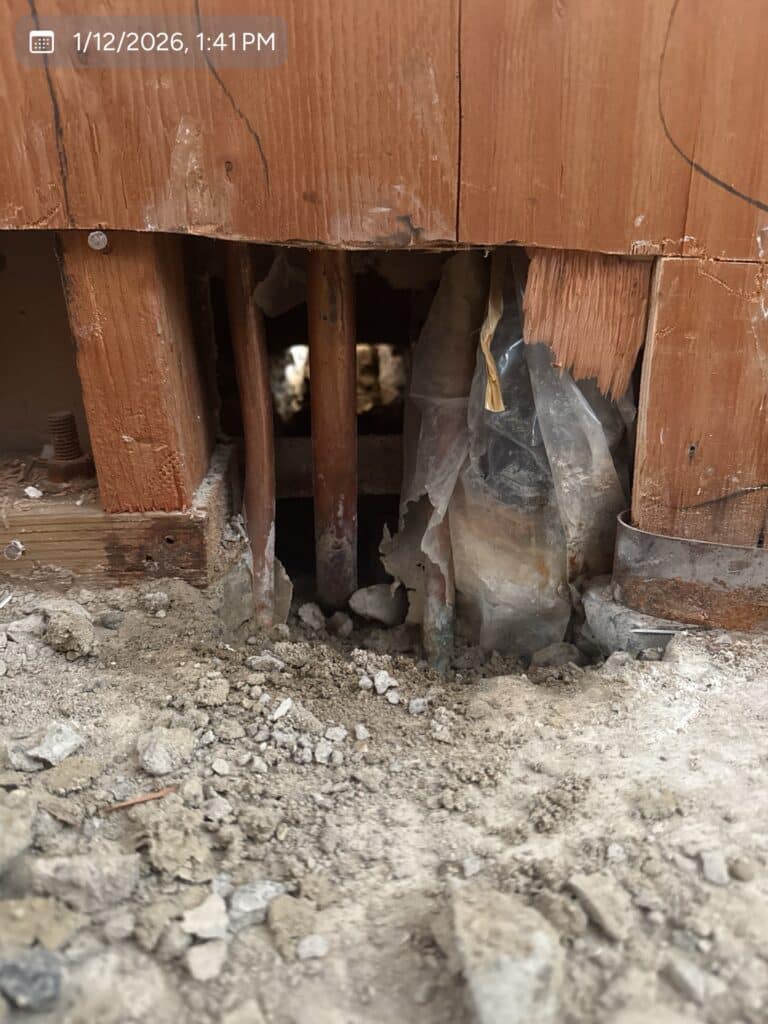
Further investigation led to the removal of a wall vent, exposing sections of the original underground copper plumbing system.
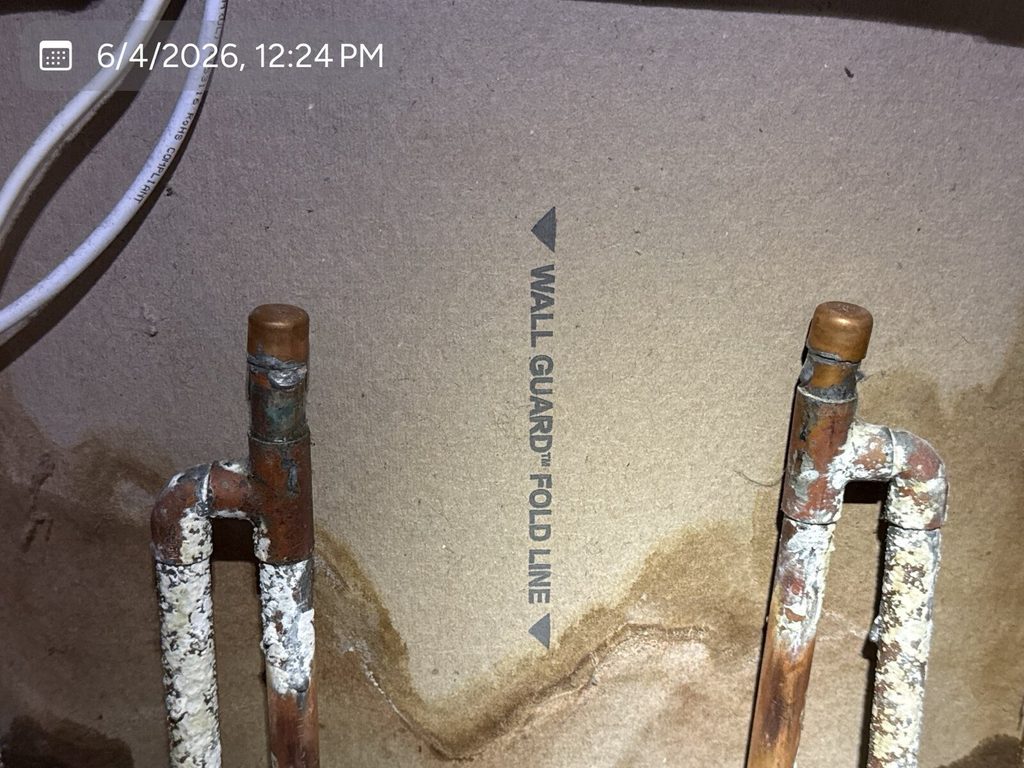
During inspection, it was observed that several of the abandoned copper lines had been capped rather than completely disconnected.
This immediately raised concern.
In many repipe projects, abandoned piping is cut, disconnected, and permanently removed from service. However, when a pipe is capped, it may indicate that the line remains pressurized. If a line is truly abandoned and disconnected from the water supply, there is generally no functional need to install a cap.
Additional testing was performed to determine the status of these underground lines.
Testing ultimately confirmed that the original underground copper piping system remained active and pressurized despite the home’s previous repipe project.
Findings
The investigation revealed that although the customer had paid for a complete overhead repipe, the original underground copper piping had never been fully removed from service.
Whether this occurred intentionally, unintentionally, or due to oversight could not be determined. However, the result was clear:
- The original underground piping remained connected.
- The underground piping remained under pressure.
- One of the underground lines was actively leaking.
- The primary purpose of the repipe had been defeated.
The fundamental objective of most overhead repipe projects is to eliminate aging underground piping and the future risk of slab or underground leaks. In this case, the customer invested significant money into replacing the plumbing system overhead, yet the original leak-prone underground system continued to operate unnoticed.
Additional Challenges
The active underground system presented another significant problem.
Because no accessible fixtures remained directly connected to portions of the underground piping, there was no practical location to acoustically access or isolate individual branch lines. This explains why traditional ultrasonic methods failed to identify the leak location.
One possible approach would have been to perform invasive testing by opening walls throughout the residence to expose multiple manifold locations and individually isolate every branch line. While technically feasible, this would have resulted in substantial property damage and increased costs for the homeowner.
Recommended Solution
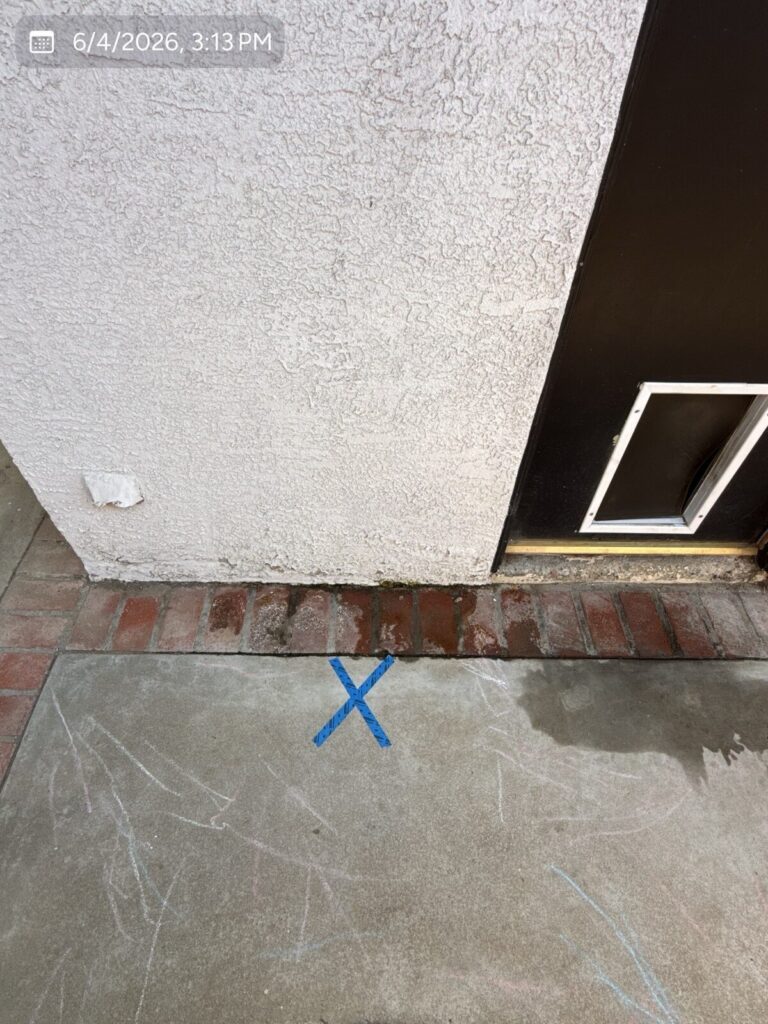
Rather than pursuing widespread destructive testing, the decision was made to identify and mark the primary underground supply line feeding the remaining active underground plumbing network.
By locating this single feed line, the customer could install a new overhead replacement line and permanently disconnect the entire underground piping system from service.
This approach accomplished the original goal that should have been achieved during the repipe project:
- Elimination of all underground domestic water piping.
- Elimination of the active underground leak.
- Avoidance of extensive wall demolition.
- Reduction in future leak risk.
Industry Observations
This case highlights a recurring issue encountered throughout the leak detection industry.
Many homeowners assume that a “complete repipe” automatically means all original underground piping has been removed from service. Unfortunately, that is not always the case.
Without proper verification and pressure isolation testing, underground piping may remain active long after a repipe has been completed. Homeowners can unknowingly continue operating aging underground plumbing systems while believing they have been fully protected from future slab leaks.
This case also demonstrates why leak detection requires specialized diagnostic procedures beyond basic plumbing installation knowledge. Advanced pressure testing, system isolation, investigative analysis, and acoustic diagnostics were necessary to identify a condition that remained hidden despite a previous major plumbing renovation.
Greater industry standards, documentation requirements, and post-repipe verification procedures would help protect consumers from costly oversights and ensure that repipe projects achieve their intended purpose.