
Case Study: Massive Flooding at Electrical Panel, Far From the Actual Underground Leak
Service Type: Underground Water Main Leak Detection.
Property Type: Residential property with substantial elevation change.
Primary Challenge: Severe water migration, misleading surface flooding, and acoustic interference.
Detection Methods: Isolation testing, site analysis, utility-pathway inspection, and tracer-gas detection.
Outcome: The underground pipe failure was localized in a dirt area, allowing for a small excavation and targeted repair instead of unnecessary water-main replacement or widespread exploratory digging.
Overview
Pegasus Leak Detection was called to investigate a severe underground water leak at a residential property with significant elevation changes.
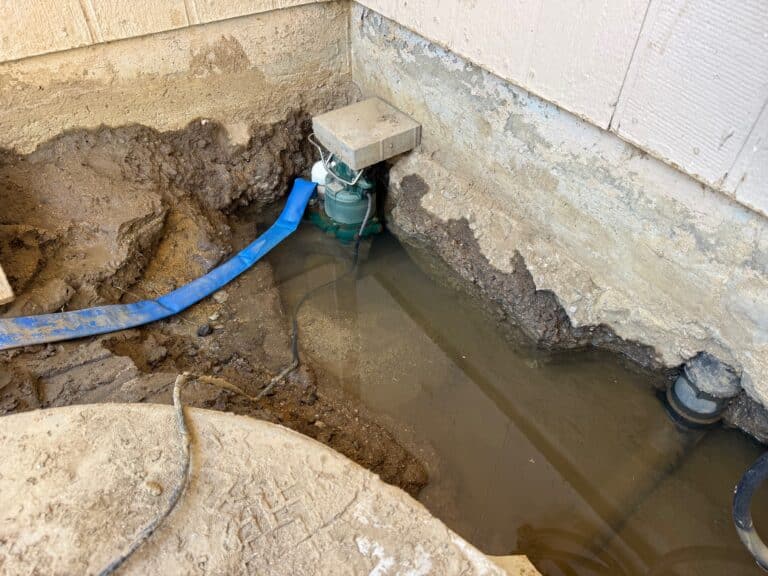
The visible flooding was dramatic. Shortly after the property’s water service was activated, a substantial volume of water began discharging near the home. Water was even shooting from the electrical panel, creating an alarming situation for the property owner.
However, the underground pipe failure was not located near the electrical panel or the area where the flooding was visible.
The actual leak was uphill and a considerable distance away.
Water from the failed underground service line had entered an electrical utility box, traveled through electrical conduit, and discharged near the home. The conduit had effectively transported the leaking water across the property.
This case demonstrates one of the most important principles in professional leak detection:
The location of the most severe flooding may have little or no relationship to the location of the actual pipe failure.
A contractor who relied only on visible water, or who lacked the equipment and experience to use an alternative detection method, could easily have excavated the wrong area, recommended unnecessary demolition, or advised the customer to replace the entire water service.
Property Conditions
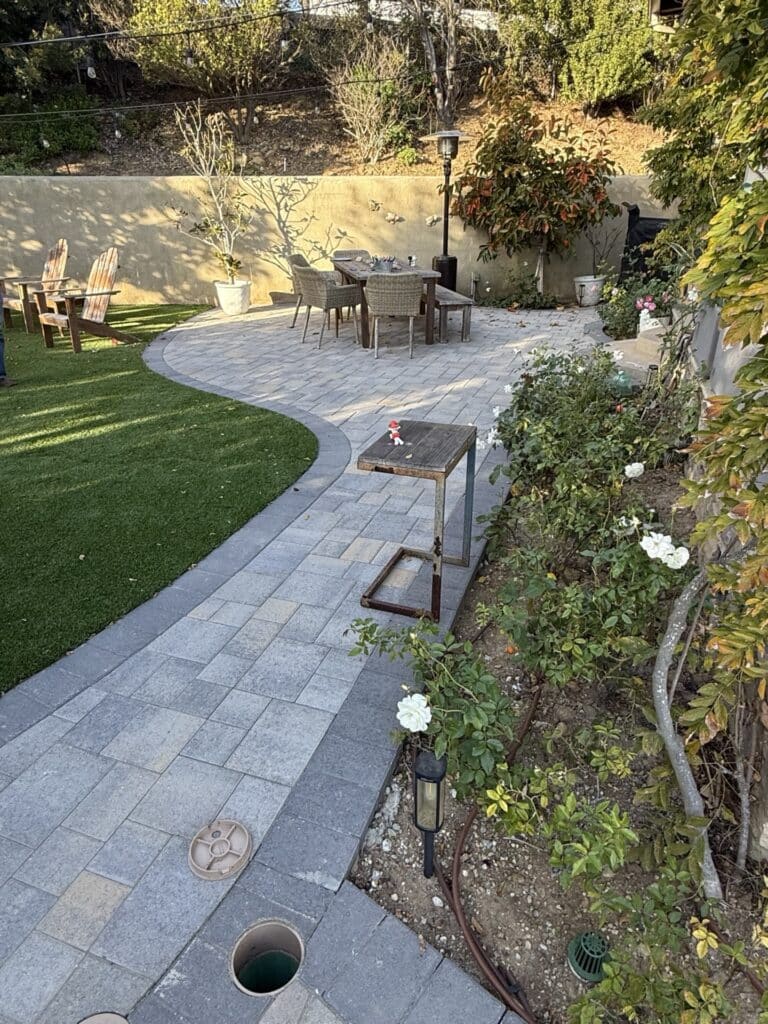
The home was situated on a significantly graded lot.
The water meter was located near the street at the front property line. From the meter, the underground water service traveled approximately 15 feet before reaching a retaining wall.
There was an elevation drop of approximately 6 feet at the retaining wall. The side yard and the home’s main water shutoff were located below that elevation, approximately another 15 feet away.
This substantial change in elevation became an important part of the investigation.
Water released from a failed pipe near the upper portion of the property had the ability to move downhill through soil, previously disturbed trenches, utility boxes, conduits, and other paths of reduced resistance.
Initial Emergency Response
The customer contacted the city after discovering severe flooding and water discharging from the electrical panel.
Because water and electrical components create a serious safety concern, the city shut off the property’s water service.
A plumber later conducted isolation testing by operating the irrigation and domestic water shutoffs while activating the water meter.
The testing indicated that the water loss was associated with the underground main water service rather than the irrigation system or interior plumbing.
When the water service was activated, substantial flooding resumed almost immediately. Within approximately 60 seconds, water began discharging from the electrical panel.
The testing confirmed that the property had a significant underground main-line leak. However, it did not establish the precise location of the failed pipe.
Confirming that a line is leaking and locating the exact point of failure are two very different tasks.
Why the Visible Flooding Was Misleading
The most dramatic water discharge was occurring near the home, but there was no pressurized water piping inside the electrical panel.
The panel could not be the source of the water loss.
It was instead the endpoint of a migration pathway.
This distinction is essential because visible water is often treated as direct evidence of leak location. A property owner or inexperienced contractor may reasonably assume that water emerging from the ground, a wall, a utility box, or another building component must be coming from a broken pipe immediately nearby.
That assumption is frequently incorrect.
Water can travel significant distances through:
- Utility trenches
- Loose or previously disturbed soil
- Electrical conduit
- Pipe sleeves
- Drainage materials
- Voids beneath concrete
- Wall cavities
- Foundation penetrations
- Changes in soil density
- Natural changes in elevation
- Other paths of reduced resistance
In this case, the volume of water was substantial enough to create severe flooding far from the actual underground failure.
The size and intensity of the visible discharge made the false location appear even more convincing.
Understanding the Elevation and Water Path
The property’s grading provided an important clue.
Because the visible flooding was occurring at a lower elevation, it was reasonable to investigate whether water from an uphill pipe failure was moving downward through an existing utility pathway.
The investigation shifted toward the upper portion of the lot, above the retaining wall and closer to the water meter.
An in-ground electrical utility box was located in that area.
When the box was opened, it was found to contain water.
When the water service was briefly activated, the electrical box began flooding rapidly. Water rose inside the box, entered an electrical conduit, traveled downhill through the conduit, and discharged at the electrical panel near the home.
The electrical conduit had become an unintended drainage system.
The water appearing at the house was not showing where the pipe had failed.
It was showing where the migrating water had found an exit.
Why Acoustic Leak Detection Was Severely Limited
Acoustic leak-detection equipment is designed to identify sound and vibration created by pressurized water escaping from a pipe.
However, acoustic equipment does not completely eliminate environmental noise.
When a ground microphone is placed against a surface, it primarily listens for vibrations transmitted through that surface. Nearby traffic, pumps, machinery, footsteps, flowing water, and water striking hard surfaces can interfere with the signal being investigated.
In this case, a substantial volume of water was pouring from the electrical panel and striking the ground.
The resulting aboveground noise interfered with the underground sound that acoustic equipment would normally attempt to identify.
The visible flooding therefore created two separate problems:
- It falsely suggested that the leak might be near the home.
- It generated enough ambient noise to reduce the effectiveness of conventional acoustic testing.
A contractor relying exclusively on acoustic listening equipment could have concluded that the leak was impossible to locate.
That would not mean the leak was undetectable.
It would mean that the contractor lacked an appropriate secondary method for the site conditions.
Selecting the Correct Leak-Detection Method
Because the leak was substantial, the service-line distance was relatively short, and acoustic testing was being compromised by the noise of the flooding, Pegasus Leak Detection selected tracer-gas testing as the preferred methodology.
Tracer gas was introduced into the isolated underground water service.
The gas escaped from the failed section of pipe, moved through the surrounding soil, and became detectable at the ground surface.
Because the pipe failure was significant, the gas response was strong and developed quickly. Tracer gas was effectively venting through the soil near the actual leak location.
This allowed the failure area to be identified without excavating near the visible flooding and without attempting to follow the water backward through the property.
The leak was localized in an accessible dirt area near the upper portion of the property.
The Result: A Small Excavation and Targeted Repair
Once the leak location was identified, the repair required only a limited excavation and repair of the damaged section of pipe.
The customer did not need to replace the entire underground water service.
The area near the electrical panel did not need to be excavated in an attempt to locate a nonexistent pipe failure.
The property did not need to be trenched from the visible flooding toward the water meter.
This is the practical value of professional leak detection.
The purpose is not simply to confirm that water is being lost. The purpose is to provide sufficiently reliable location information so that the smallest reasonable area can be opened and repaired.
Without proper detection, the customer could have faced recommendations involving:
- Replacement of the entire water main
- Excavation in the wrong area
- Exploratory trenching across the property
- Removal of landscaping or hardscape
- Destructive work near the electrical panel
- Repeated digging in an attempt to follow migrating water
- Additional water damage while incorrect areas were investigated
- Significant labor and restoration costs unrelated to the actual repair
A localized underground pipe failure could easily have been turned into a major construction project.
Why Leak Detection Exists
Leak detection is necessary partly because water damage does not always occur where the leak is located.
Sometimes water surfaces directly above a failed pipe. In many other cases, it travels before becoming visible.
The greater the volume of water, the more convincing the false location may appear.
In this case, the migration route allowed a large amount of water to emerge far from the actual failure. The water was not merely seeping from the ground. It was discharging forcefully enough to create severe flooding and appear to be associated with the electrical panel.
Had the conduit discharged through a break beneath a slab, walkway, driveway, or concrete side yard, water might have appeared to shoot directly from the ground under pressure.
An inexperienced or financially motivated contractor could have claimed that the pipe failure was located directly below that discharge.
The contractor might then have begun jackhammering or excavating at the visible water location.
When no broken pipe was found, the excavation could have been extended farther and farther in an attempt to chase the water.
By the time the true migration path was understood, substantial and unnecessary property damage could already have occurred.
Visible water can identify the endpoint of a migration route rather than the source of the water.
A Related Water-Migration Case
Pegasus Leak Detection has documented another case in which water surfaced away from the actual underground pipe failure.
In that investigation, water migrated through a pipe sleeve and created a false indication of the leak’s origin.
That earlier case involved water seepage through a sleeve on a smaller scale.
The present case involved the same underlying principle on a much larger and more alarming scale. A substantial underground water loss entered an electrical utility box, traveled through conduit, and produced severe flooding near the home.
Both cases demonstrate the same essential lesson:
A pathway carrying water is not necessarily the source of the water.
Equipment Ownership Is Not Leak-Detection Competence
This investigation required more than owning an acoustic listening device.
It required the ability to:
- Interpret property grading and elevation
- Understand underground water migration
- Recognize that visible flooding was a false leak-origin indicator
- Identify electrical conduit as a possible migration pathway
- Understand the limitations of acoustic testing
- Select an alternative detection methodology
- Properly perform tracer-gas testing
- Interpret the tracer-gas response
- Confirm a defensible excavation area
- Limit unnecessary property damage
A contractor may own acoustic equipment and advertise leak-detection services. That does not establish competence in professional leak location.
Plumbing and leak detection are related services, but they are not the same discipline.
Plumbers are trained to install and repair piping systems. Some plumbers may also possess legitimate leak-detection training and experience. However, owning a listening device does not automatically provide the knowledge required to understand water migration, acoustic interference, tracer-gas behavior, pressure relationships, utility pathways, or complex site conditions.
Pegasus Leak Detection is regularly contacted by contractors and plumbing companies that advertise leak-detection services but cannot confidently locate the failure once a job becomes more complicated than listening directly above a pipe.
When acoustic testing becomes difficult, an unqualified operator may tell the customer:
- “There is too much noise.”
- “The leak cannot be heard.”
- “The line cannot be located.”
- “The water is coming up here, so the leak must be here.”
- “We need to start digging and follow it.”
- “The entire service should be replaced.”
Those conclusions may reflect the limitations of the contractor rather than the limitations of leak-detection technology.
Professional leak detection is not the use of one instrument.
It is a diagnostic process involving multiple technologies, field experience, physical reasoning, and the ability to change methods when site conditions make one form of testing unreliable.
The Risk of Unnecessary Water-Main Replacement
When a contractor cannot locate an underground leak, complete line replacement may be presented as the only practical option.
In some cases, replacement may be appropriate due to pipe material, age, condition, repeated failures, accessibility, or the customer’s long-term goals.
However, replacement should not be recommended merely because the contractor lacks the ability to identify a localized failure.
A contractor who performs both the diagnosis and the replacement may also have a financial incentive to recommend a larger scope of work.
That does not mean every replacement recommendation is dishonest. It does mean customers should receive enough diagnostic information to understand why replacement is being recommended and whether the actual failure was ever located.
In this case, proper leak detection showed that the customer needed a small excavation and a targeted pipe repair.
Without that information, the customer could have been pressured into replacing the entire water service.
The Need for Leak-Detection Standards
The leak-detection industry currently allows companies with dramatically different levels of training, experience, equipment, and methodology to market what appears to be the same service.
To the public, a plumber carrying a ground microphone may appear equivalent to a dedicated leak-detection specialist.
The difference often becomes apparent only after:
- An incorrect location is marked
- The wrong area is excavated
- Concrete or landscaping is unnecessarily removed
- A leak is declared impossible to locate
- A complete line replacement is recommended
- The customer pays for repeated unsuccessful investigations
- Additional property damage occurs
This case illustrates why minimum standards or a formal code of conduct would provide meaningful consumer protection.
Companies offering professional leak-location services should be expected to:
- Document isolation testing
- Explain what portion of the system was tested
- Distinguish leak confirmation from precise leak location
- Explain the limitations of the testing method used
- Recognize when environmental noise compromises acoustic testing
- Use an alternative method when conditions require it
- Evaluate grading, water migration, and utility pathways
- Avoid treating visible water as automatic proof of leak origin
- Provide evidence supporting excavation recommendations
- Disclose when a complete replacement is recommended without a confirmed failure location
- Maintain appropriate training and properly functioning equipment
- Avoid destructive access unless diagnostic findings justify it
Standards would not eliminate every difficult investigation.
They would, however, make it harder for inexperienced or dishonest contractors to use uncertainty as justification for unnecessary excavation, excessive repair scopes, or complete system replacement.
Conclusion
The most severe flooding on this property occurred far from the actual underground pipe failure.
Water from the leaking service line entered an electrical utility box near the upper portion of the lot. It then traveled downhill through electrical conduit and discharged near the home, creating the false appearance that the source of the water was associated with the electrical panel.
The visible flooding did not identify the leak.
It identified the end of the water’s travel path.
Acoustic testing was also severely limited because the large volume of water striking the ground created significant ambient noise.
By analyzing the property’s elevation, identifying the conduit migration pathway, recognizing the limitations of acoustic testing, and selecting tracer gas as the appropriate alternative method, Pegasus Leak Detection localized the underground failure in an accessible dirt area.
The customer needed a small excavation and a targeted pipe repair.
They did not need exploratory demolition, excavation near the visible flooding, or replacement of the entire water main.
This case demonstrates why professional leak detection requires more than equipment ownership. It requires experience, multiple methodologies, an understanding of water behavior, and the discipline to locate the failure before recommending destructive work.
Massive flooding can occur far from an underground leak. The location where water appears should never be treated as proof of where the pipe has failed.