
Case Study: Customer Forced to Pay Twice After Incomplete and Unusable Leak Detection
Case Type: Incomplete / Non-Actionable Leak Detection
Outcome: Second inspection required to properly locate leak
Relevance: Consumer protection, documentation standards, and accountability
Performed By: Pegasus Leak Detection
Overview: When “Leak Detection” Doesn’t Deliver a Leak Location
A homeowner contacted Pegasus Leak Detection after already paying another company to locate an underground hot water leak.
The customer made a smart initial decision—she intentionally avoided calling a plumber first, understanding that leak detection is a specialized service.
However, the company she hired failed to deliver the one thing the service is supposed to provide:
A clear, usable leak location.
What Happened Before We Arrived
According to the customer:
- The prior technician was on site for approximately 20 minutes
- No confirmed leak location was identified
- No written report was provided
- No repair guidance was given
- No documentation was left for the next contractor
Instead:
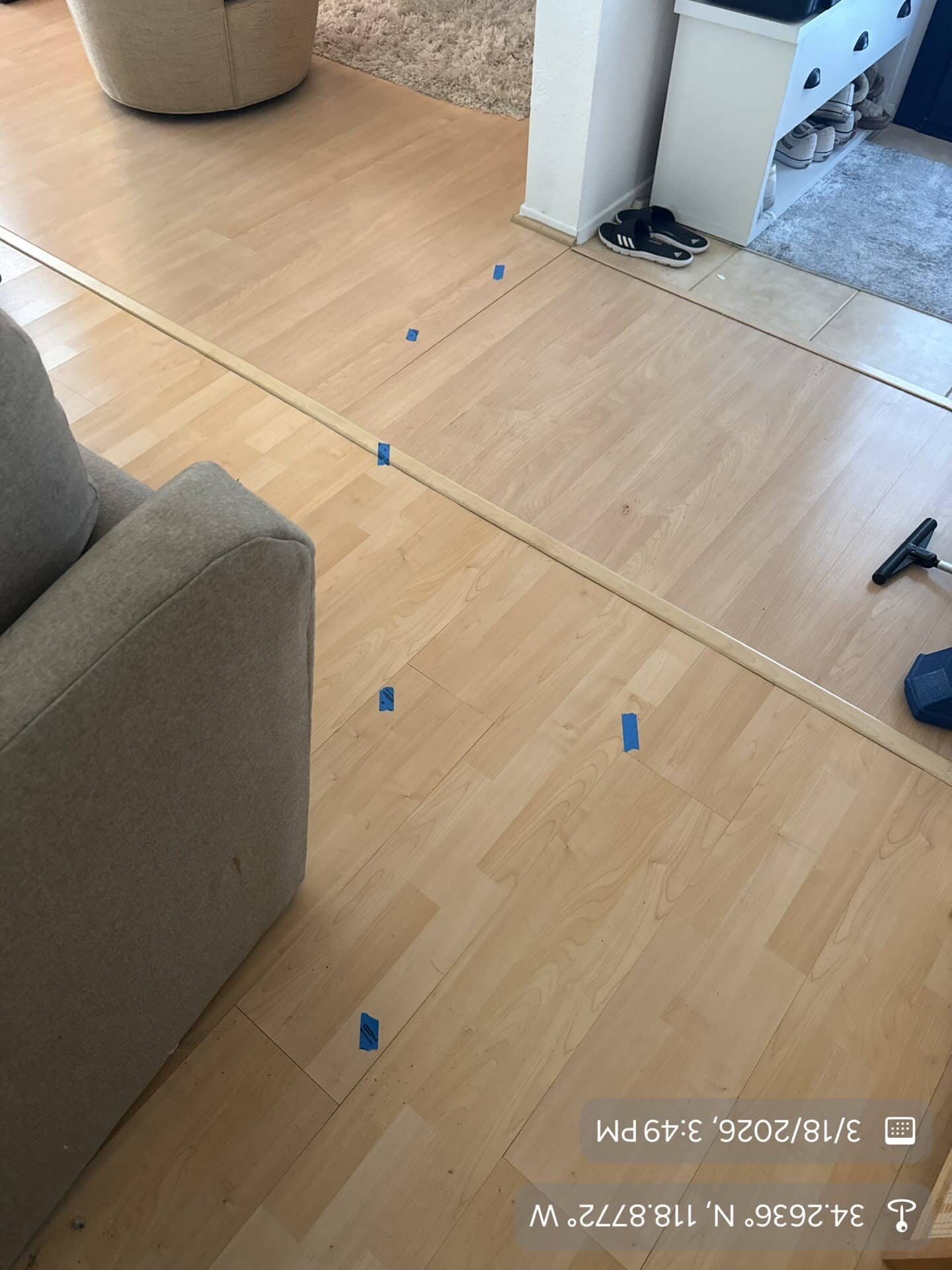
- A few pieces of tape were placed on the ground
- A general area was loosely marked near one manifold
- The second manifold was never identified
At that point, the customer had paid for leak detection—but had no actionable result.
Breakdown: Why the First Inspection Failed
No Confirmed Leak Point
The prior company did not:
- Identify the exact leak location
- Confirm the affected pipe
- Provide a precise ground mark
Without these, the service is incomplete.
No Manifold Identification
- Only one manifold was loosely referenced
- The second manifold was not located at all
In manifold systems, this is a critical failure.
Without full system mapping, repairs cannot be performed accurately.
No Documentation or Reporting
A professional leak detection service must provide:
- Methods used
- Equipment applied
- Findings and limitations
- Confirmed leak location
- Repair guidance
None of this was provided.
This leaves:
- No accountability
- No transparency
- No usable outcome
The Turning Point: When the Plumber Arrived
The customer then hired a plumber to perform the repair.
The plumber quickly realized:
- There was no confirmed leak location
- No pipe identification
- No complete manifold mapping
- No report explaining findings
The plumber contacted the original company to ask basic questions:
- Where is the leak?
- Which pipe is affected?
- Where is the second manifold?
According to the customer:
- The responses were unhelpful and unclear
- The technician could not provide the necessary information
At this point, the customer was forced to start over and pay a second company.
Pegasus Leak Detection Investigation
Pegasus performed a full diagnostic process using:
- Ultrasonic equipment
- Calibrated utility locating equipment
- Infrared imaging
- Structured methodology and patented processes
What We Found
Pipe Path Verification
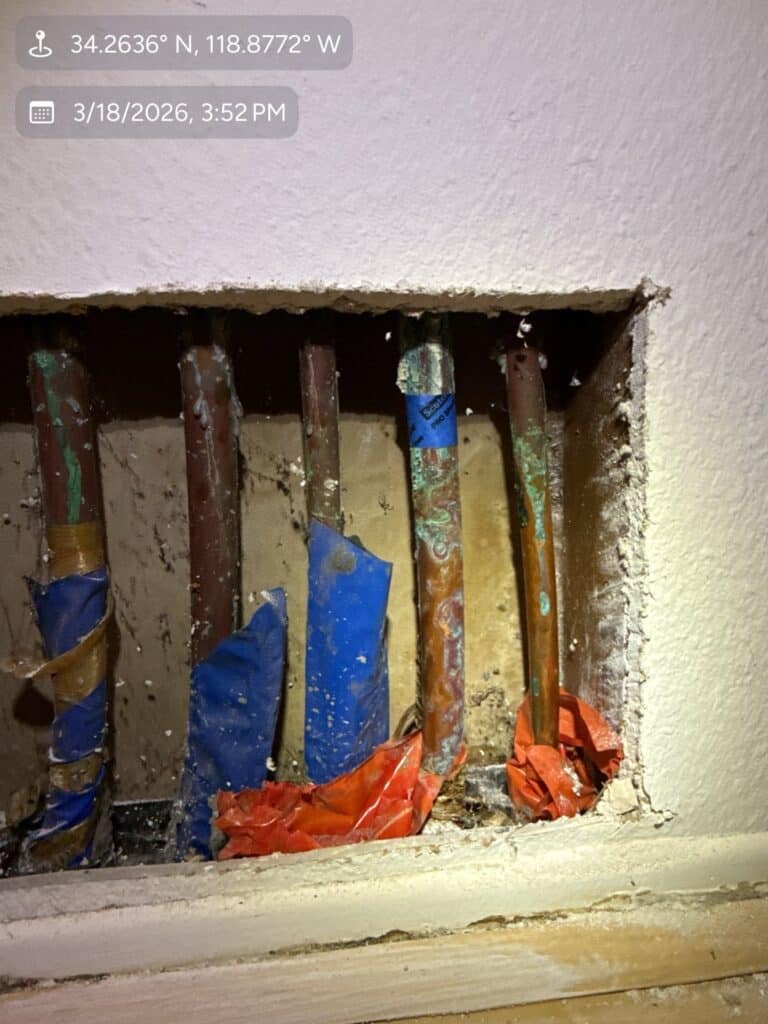
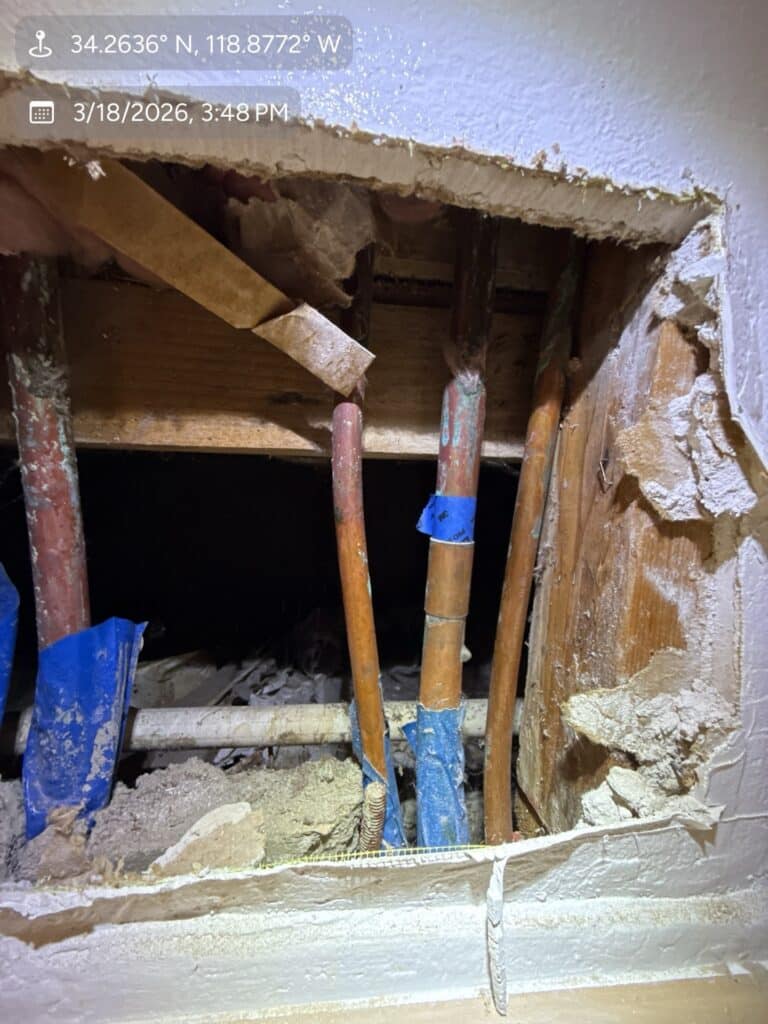
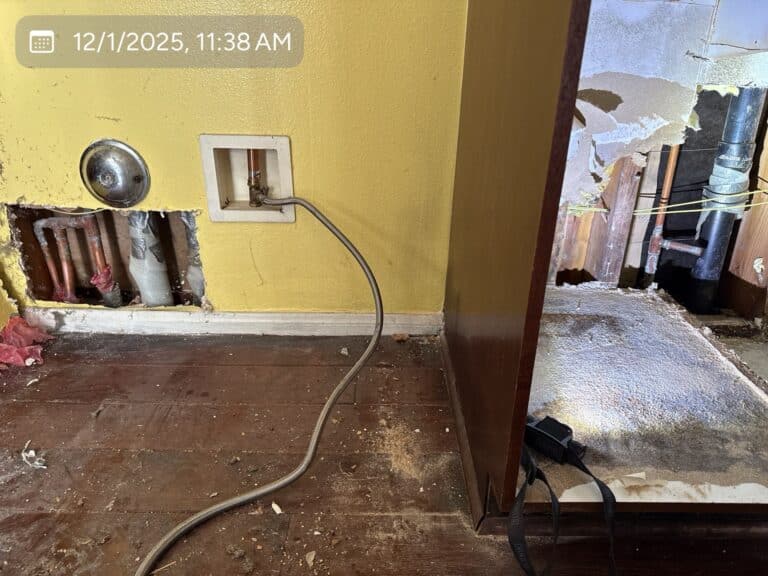
- Infrared imaging revealed a heat signature corridor from the water heater toward a side wall near a vanity
- This roughly aligned with the prior company’s tape marks
However:
- After proper utility locating verification, the actual pipe path was approximately 16 inches away from those markings
Why That 16-Inch Error Matters
A 16-inch discrepancy can result in:
- Incorrect demolition location
- Unnecessary slab or flooring damage
- Wasted labor and repair cost
- Additional confusion for contractors
This level of inaccuracy is not usable in real-world repair scenarios.
Likely Cause of the Error
Based on the evidence:
- The prior company may have relied primarily on infrared imaging
- The pipe path was not verified using proper locating equipment
Infrared alone can show general heat patterns—but cannot confirm exact pipe location or leak point.
Final Outcome
Pegasus successfully provided:
- Confirmed leak source
- Confirmed pipe identification
- Accurate pipe path mapping
- Actionable repair guidance
The customer finally received what should have been delivered during the first inspection.
Why This Case Matters
This case highlights a serious issue in the leak detection industry:
Paying for a Service Without Receiving the Deliverable
The customer:
- Paid for leak detection
- Did not receive a usable result
- Had to pay again for the same service
This is not a communication issue—it is a failure to deliver the core service.
What Professional Leak Detection Should Always Include
At a minimum:
- Precise leak location marking
- Identification of the affected pipe
- Complete manifold mapping (when applicable)
- Written report with methods and findings
- At least one repair recommendation
If limitations exist (access, isolation, etc.), they must be clearly documented.
A customer should never be left guessing what was accomplished.
Industry Problem: Lack of Standards and Accountability
This case reflects broader systemic issues:
- No licensing requirements
- No enforced documentation standards
- No minimum performance expectations
- Companies advertising services they cannot properly deliver
Owning equipment does not equal competency.
Leak detection requires:
- Structured methodology
- Verified testing processes
- Technical interpretation
- Deliverable-based accountability
Consumer Takeaway
Leak detection is not complete unless it produces actionable results.
If you pay for leak detection, you should receive:
- A confirmed leak location
- Clear documentation
- Information your plumber can actually use
If not, the service was not completed properly.
Closing Statement
This case reinforces a critical point:
Consumers should not have to pay twice for the same service.
Until the industry adopts:
- Licensing
- Documentation standards
- Enforceable deliverables
Homeowners will remain vulnerable to:
- Incomplete work
- Wasted money
- Preventable frustration
Pegasus Leak Detection exists to provide clear, accurate, and usable results—the standard every customer should expect the first time.