
Water Migration Through Pipe Sleeves Causing False Leak Origin Indicators
Service Type: Slab Leak Investigation
Performed By: Pegasus Leak Detection
Overview: When Water Tells the Wrong Story
This case study highlights a simple but widely misunderstood condition in slab leak investigations:
how water can migrate through pipe sleeves and surface far from the actual leak location.
From a leak detection standpoint, this scenario is straightforward.
From an industry standpoint, it is one of the most commonly misinterpreted—and misrepresented—conditions encountered in residential slab leak work.
When misunderstood, it often leads to:
- Incorrect leak location claims
- Unnecessary demolition
- Inflated repair recommendations
Job Conditions & Key Findings
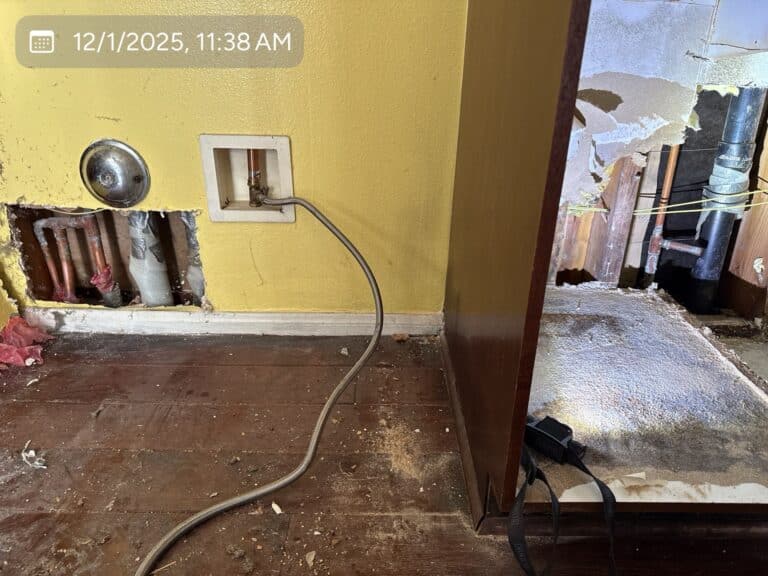
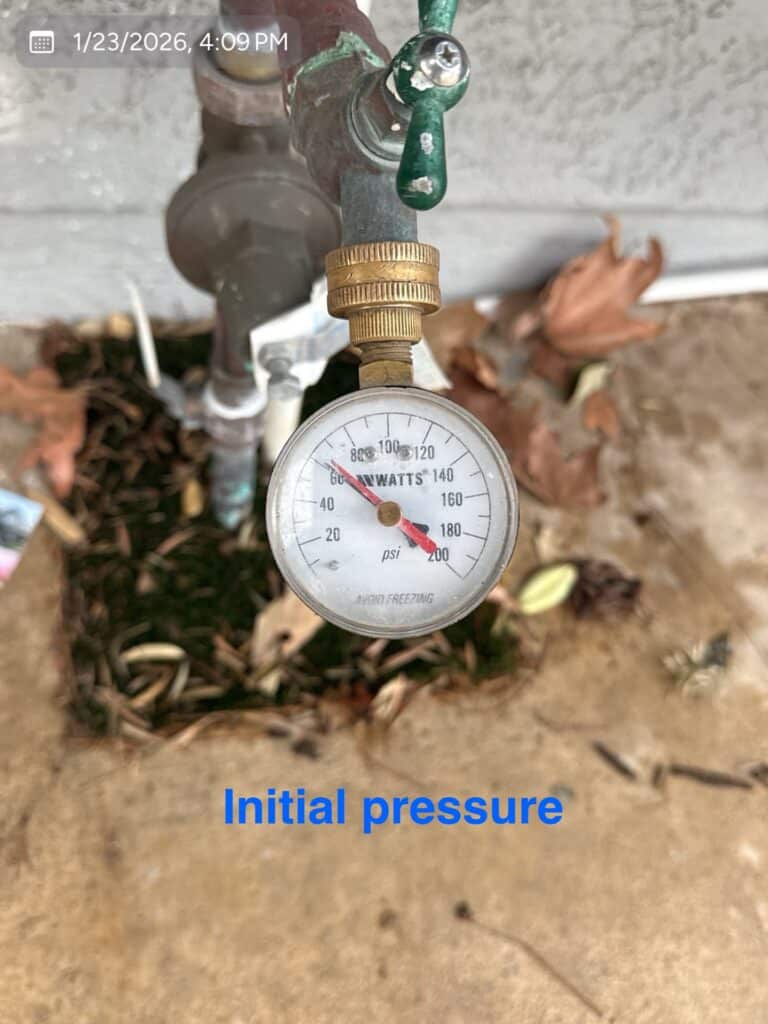
Pegasus Leak Detection was called to investigate an underground cold-water leak beneath a concrete slab.
Site Findings
- The leak originated from an underground cold-water pipe beneath the slab
- The actual leak point was located approximately 5 feet away from a visible manifold
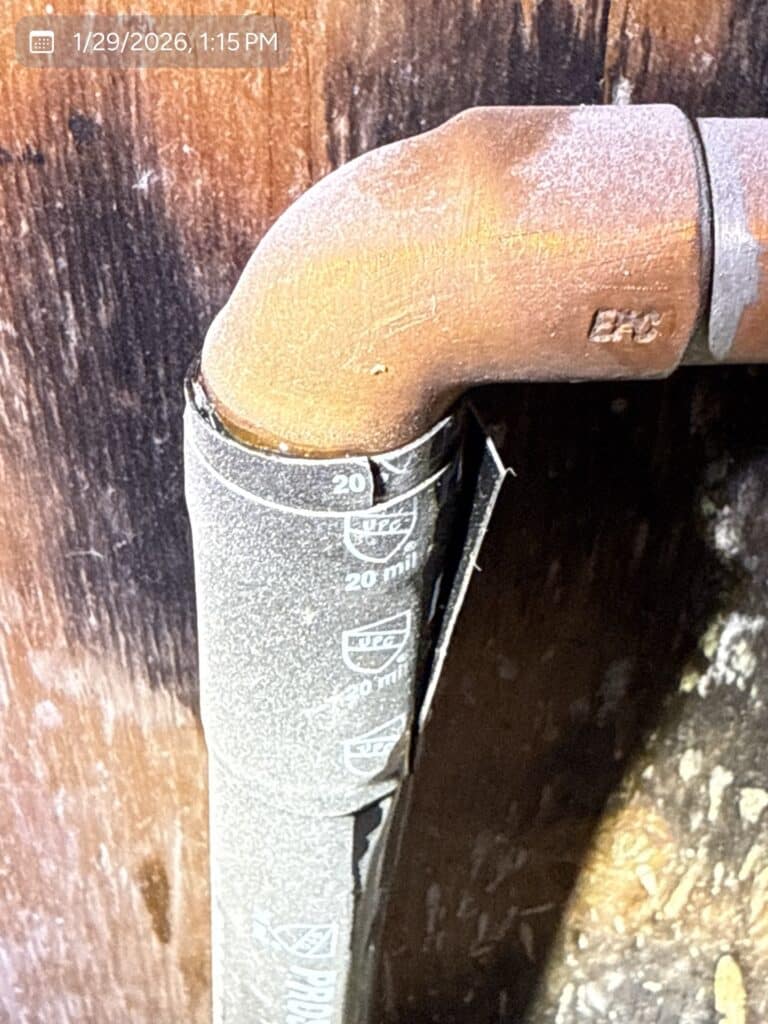
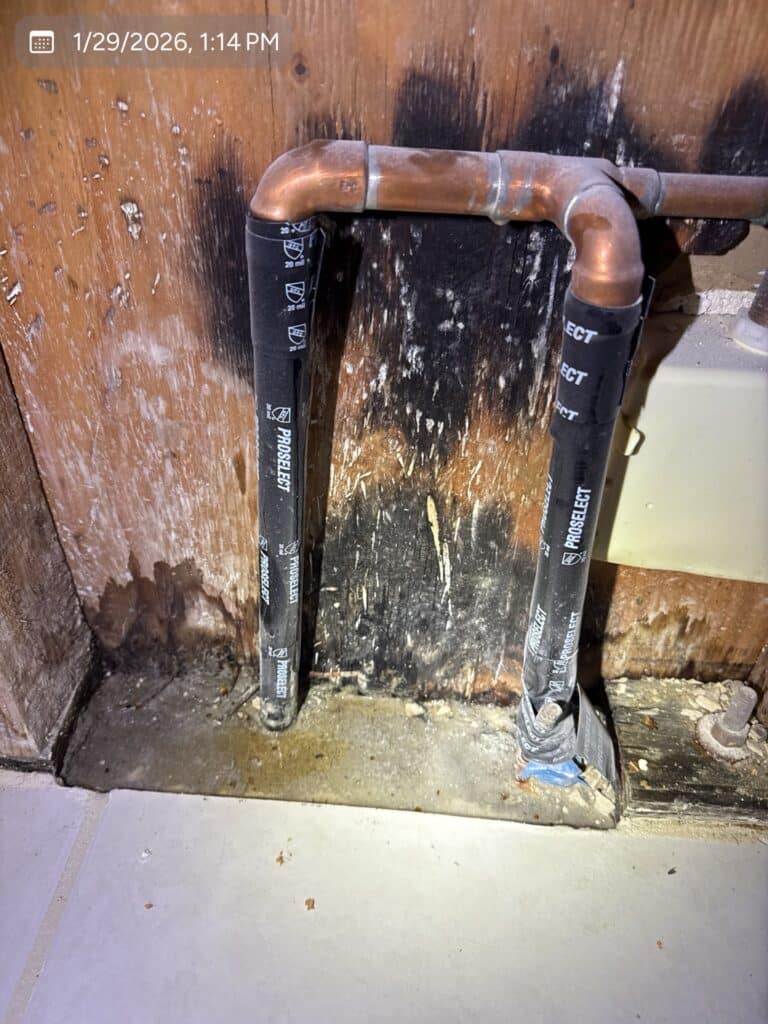
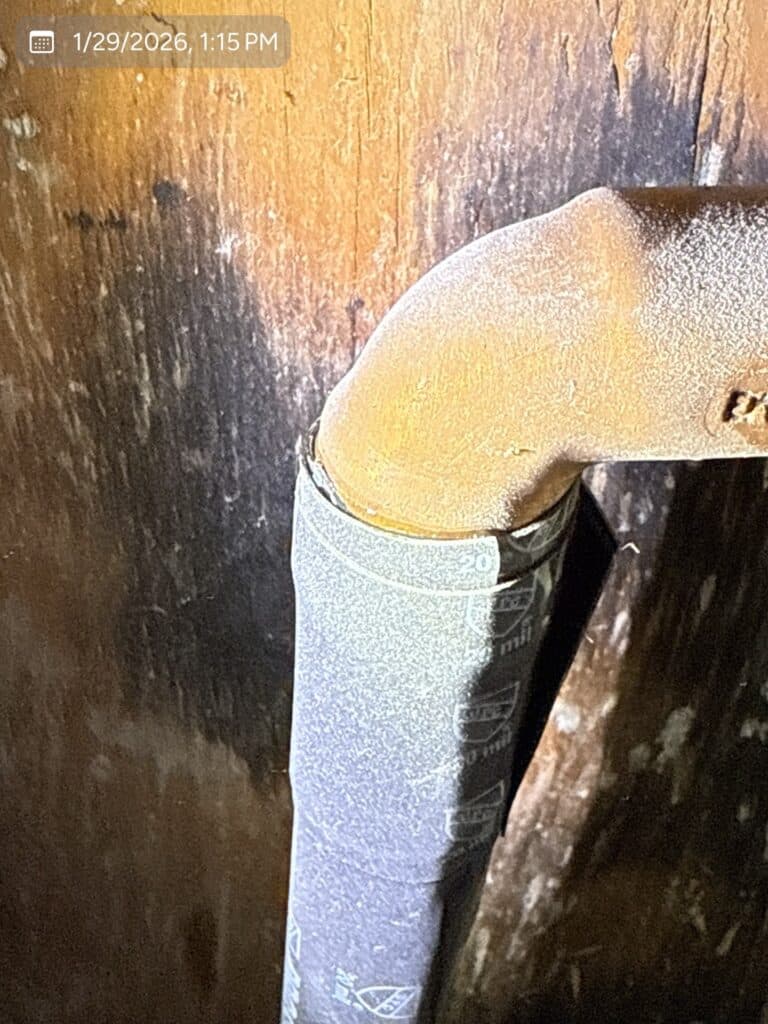
- A manifold located behind a refrigerator had pipes extending approximately 12 inches above the slab
- Of those 12 inches:
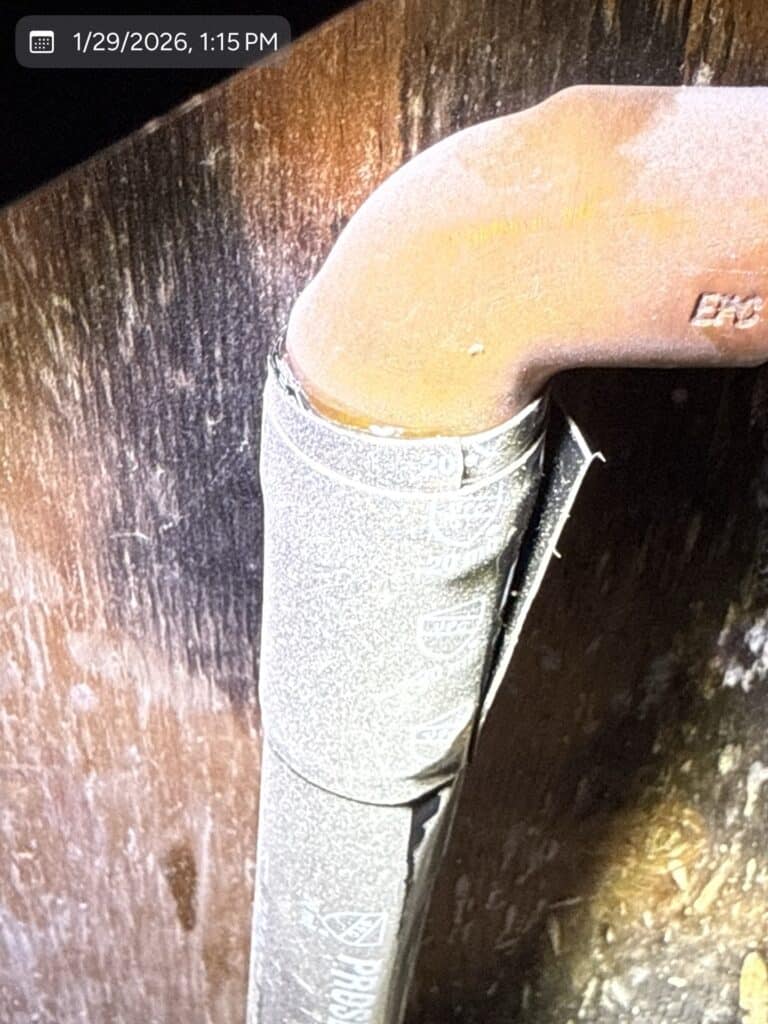
- 10–11 inches were sleeved with a black plastic sleeve
Despite the leak not being directly beneath this manifold, water was visibly emerging at the sleeve.
What Was Actually Happening
Water from the underground leak:
- Traveled laterally beneath the slab
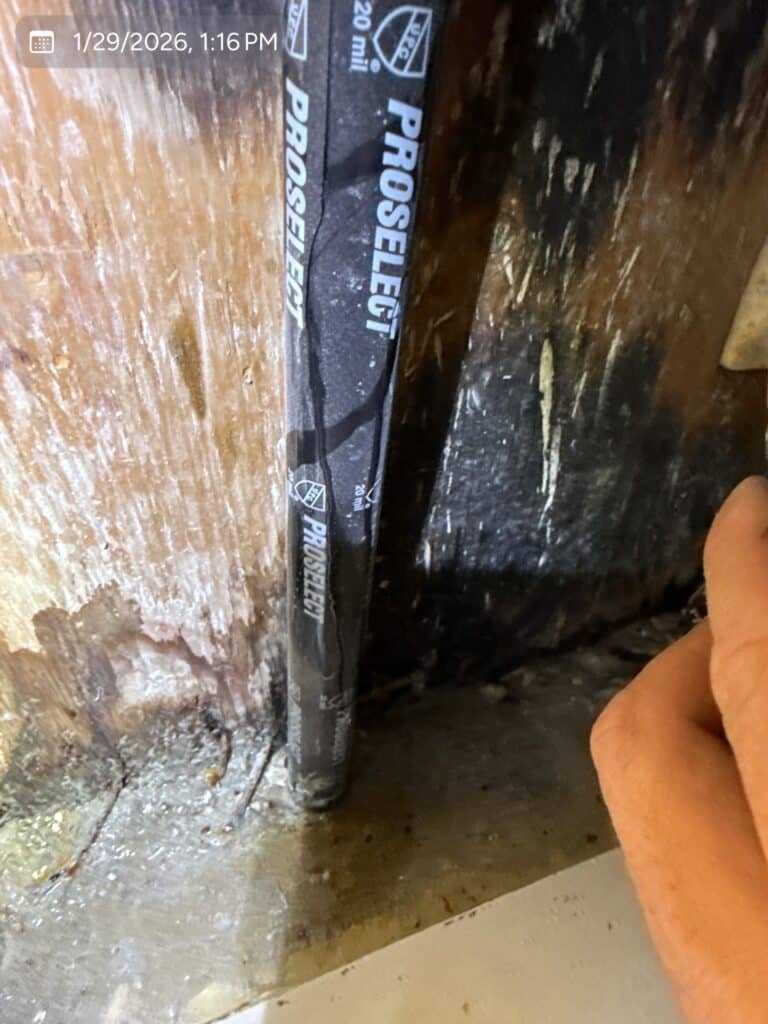
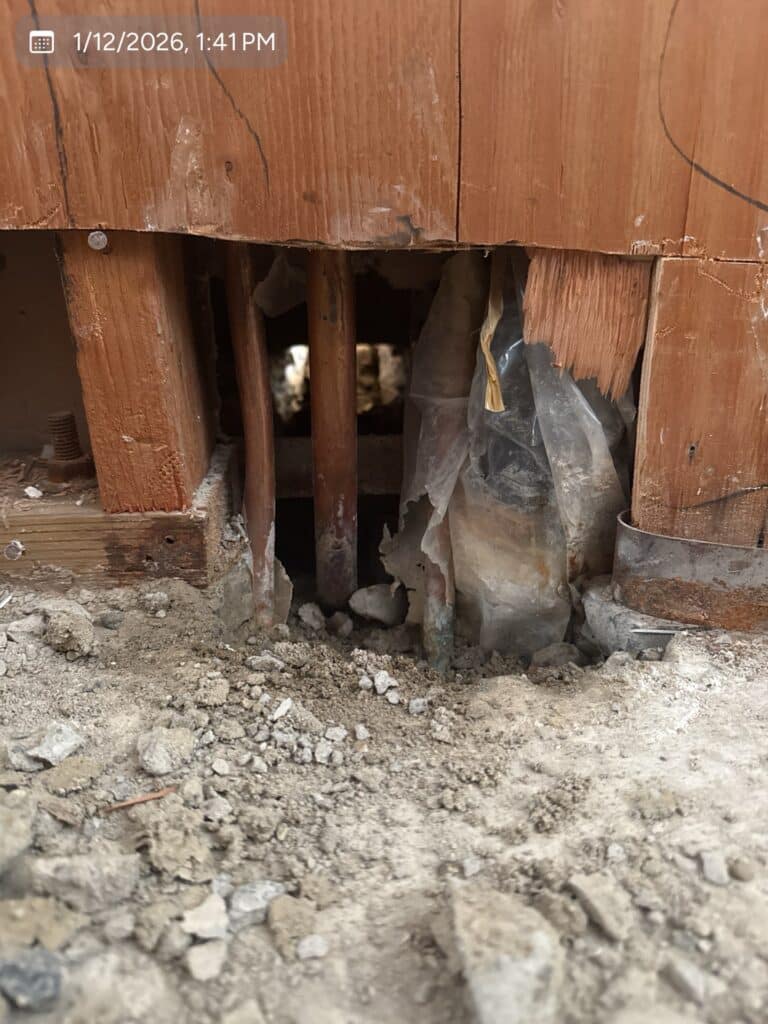
- Entered the pipe sleeve at the slab penetration
- Migrated upward inside the sleeve
- Surfaced approximately 11 inches above the concrete
When the sleeve was cut open, standing water poured out, confirming the sleeve had become both:
- A conduit for migrating water
- A temporary reservoir holding leak water
The visible water was not evidence of leak origin—only evidence of water migration.
Why This Matters: False Indicators of Leak Location
This case illustrates one of the most common diagnostic traps in slab leak investigations.
Commonly Misinterpreted Indicators
- Water appearing at or above slab surface
- Moisture or flowing water near a pipe penetration
- Rapid water movement suggesting proximity to the leak
None of these confirm leak origin.
Water follows the path of least resistance, and vertical pipe sleeves provide a near-perfect pathway for water to:
- Travel upward
- Surface far from the failure point
- Create convincing—but false—visual evidence
A contractor unfamiliar with leak migration dynamics may conclude:
“The water is coming out right here, so the leak must be here.”
In this case, that conclusion would be incorrect.
Acoustic Masking: How Pipe Sleeves Hide Leak Noise
Pipe sleeves don’t just mislead visually—they also interfere acoustically.
How Sleeves Alter Sound Transmission
When a sleeve fills with water:
- Leak noise is absorbed and dampened
- Impact noise (water striking soil or concrete) is reduced or eliminated
Simple Analogy
- Spray a garden hose onto dry concrete:
- You hear water exiting the hose
- You hear water impacting the surface
- Spray the same hose underwater:
- Both sound signatures disappear
A water-filled pipe sleeve creates a similar acoustic environment.
This masking effect can cause:
- False assumptions that the pipe is “fully sleeved”
- Misinterpretation of air or tracer movement
- Incorrect claims that detection is impossible
How This Condition Is Commonly Used to Mislead Customers
This case also exposes a frequent and concerning industry tactic.
Contractors may claim:
- “The pipe is sleeved, so leak detection can’t be done.”
- “Sleeved lines can’t be heard.”
- “The entire line is sleeved under the slab.”
In most residential construction, these statements are false.
What Building Code Typically Requires
- Sleeving only at slab penetrations
- Usually:
- A few inches above the slab
- A few inches below the slab
The vast majority of the pipe run under the slab is not sleeved.
Seeing a sleeve at a wall or floor penetration does not mean the entire line is sleeved.
When that claim is made, it is often:
- An excuse for lack of training
- A cover for inadequate equipment
- The result of false marketing
- Or a tactic to upsell unnecessary repipes or slab removal
Industry Implications: Why Leak Detection Is Not Plumbing
This case reinforces a fundamental truth:
Leak detection is not plumbing.
True leak detection requires understanding:
- Water migration behavior
- Sleeve dynamics
- Acoustic masking
- Subsurface hydraulics
Owning a listening device—or claiming to “do leak detection”—does not make a contractor qualified.
Without proper training and methodology, contractors may:
- Misidentify leak locations
- Recommend unnecessary demolition
- Escalate simple repairs into major construction
- Cause avoidable financial and structural harm
This is why industry standards, credentialing, and regulation are urgently needed.
Conclusion: Simple Physics, Serious Consequences
This case is simple—but powerful.
It demonstrates:
- How water can migrate through pipe sleeves
- Why visible water does not indicate leak origin
- How sleeves can mask acoustic signatures
- How these facts are routinely misunderstood or misused
Proper leak detection methodology prevents these errors.
Regulation would prevent the abuse.
Until then, documenting and educating through cases like this remains essential to protecting property owners and holding the industry accountable.