
Destructive Trial-and-Error “Leak Locating” Left Customer With Ruined Tile, Cut Vapor Barrier, and the Real Leak Still Active
Job Type: Residential slab leak investigation (single-story home)
System Condition: Accessible manifold
Documentation: Vapor barrier cut/compromised during prior demolition (photos on file)
Performed By: Pegasus Leak Detection
Customer Situation Before Our Arrival
The homeowner had an active leak and hired a plumbing company that advertised leak locating and repair services.
According to the customer:
- Significant demolition was performed.
- The plumber claimed they located a “very small leak.”
- The repair was buried and not left visible for verification.
- Flooding continued after the repair.
At that point, the customer contacted Pegasus Leak Detection for a proper investigation.
Conditions Observed On Arrival
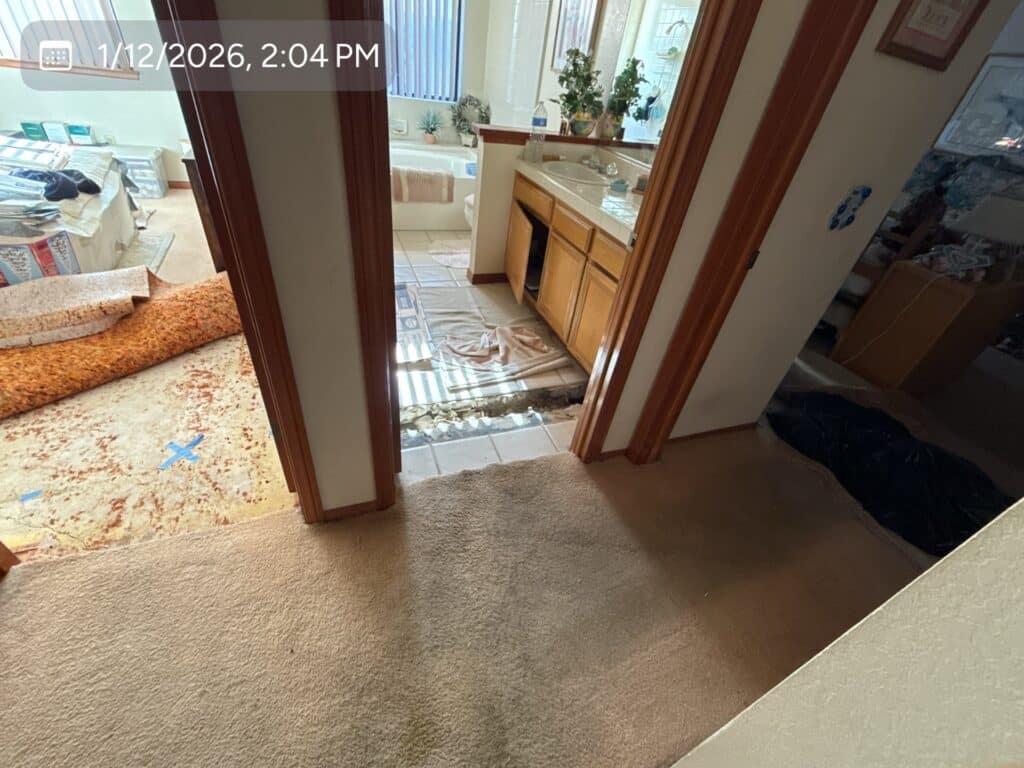
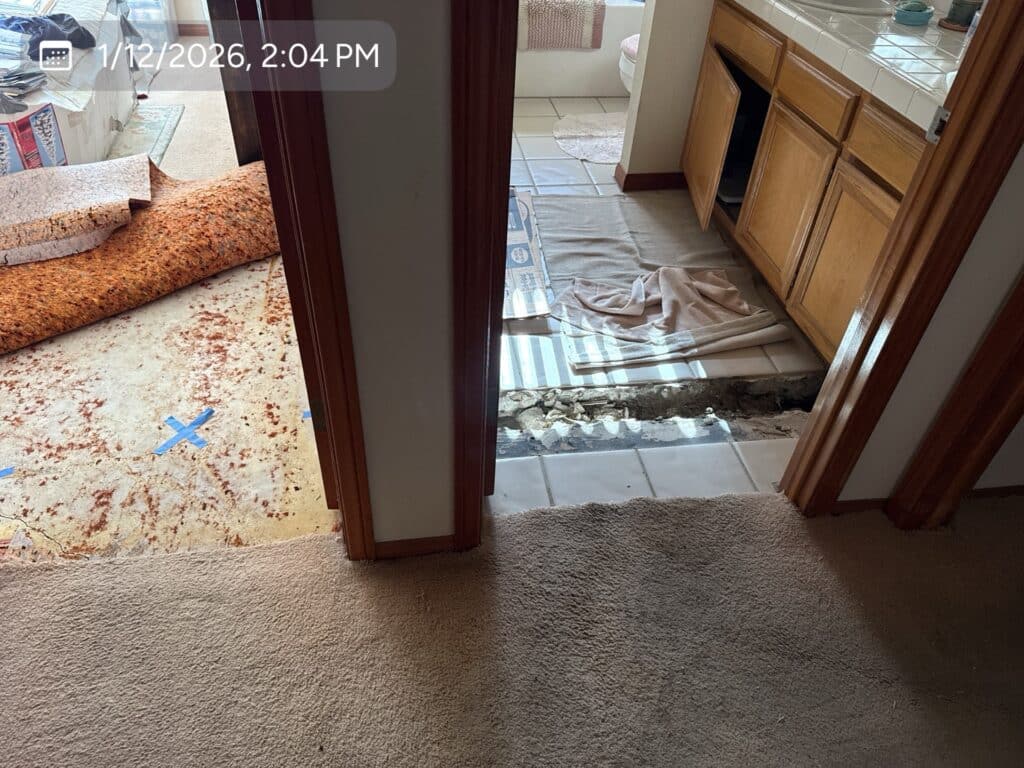
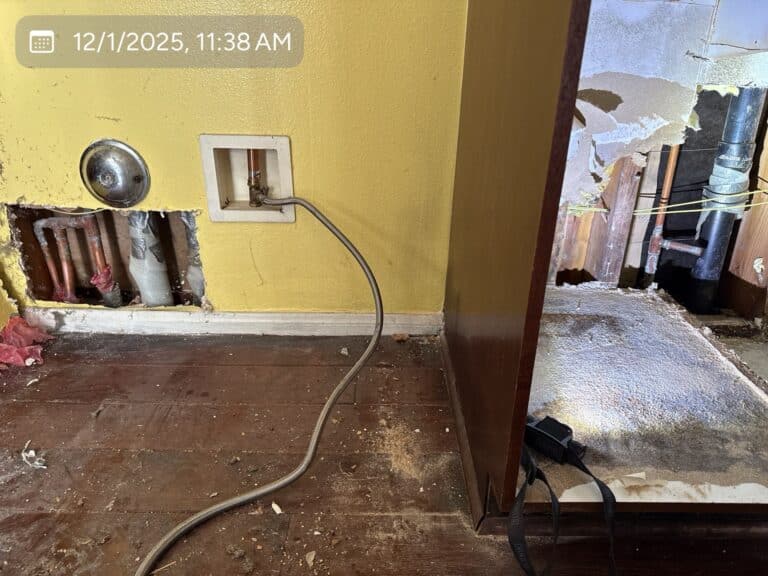
The physical damage was substantial.
Bathroom
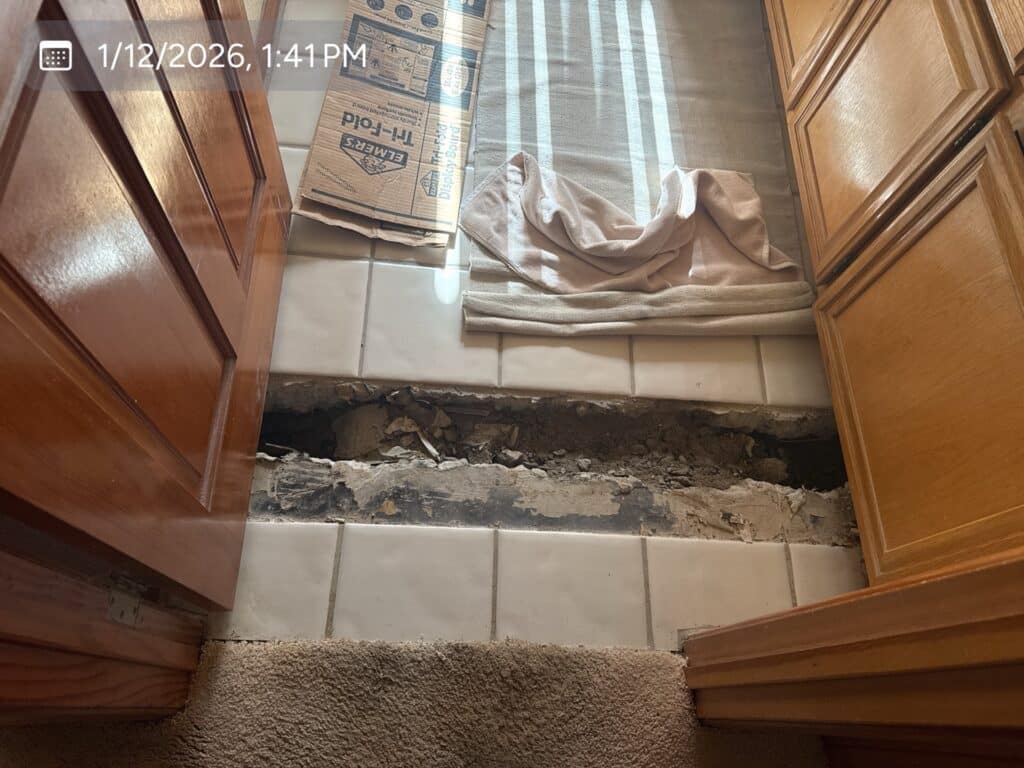
- Approximately 6 feet of slab and tile had been jackhammered in a trench configuration.
- Finished tile flooring was destroyed.
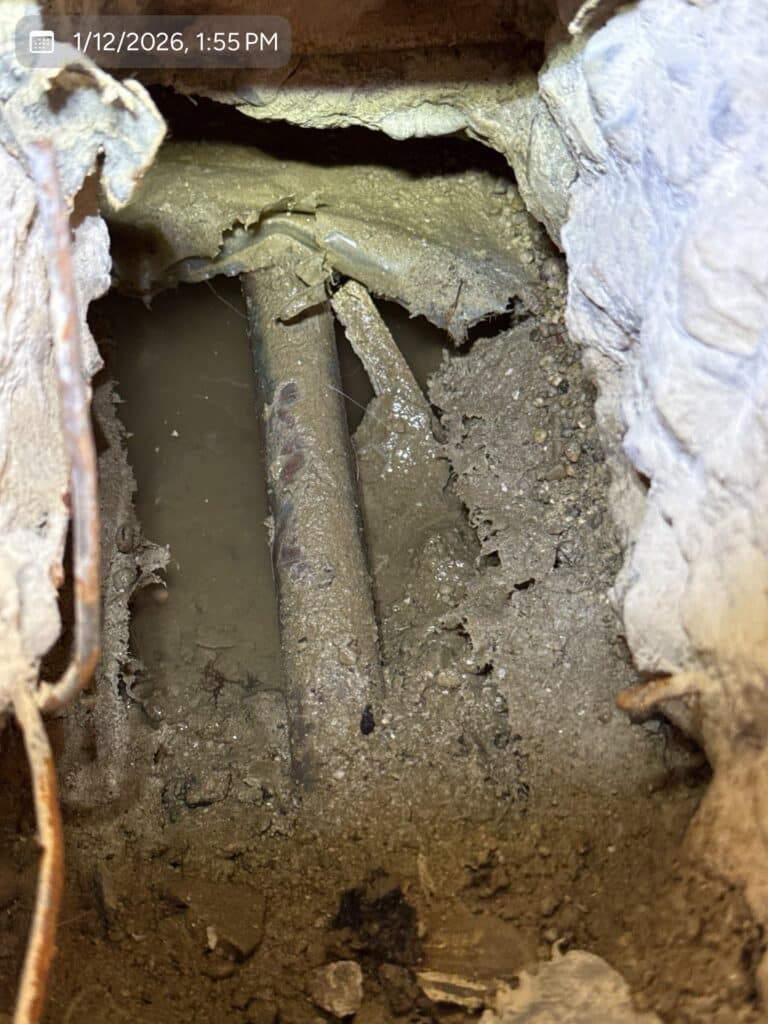
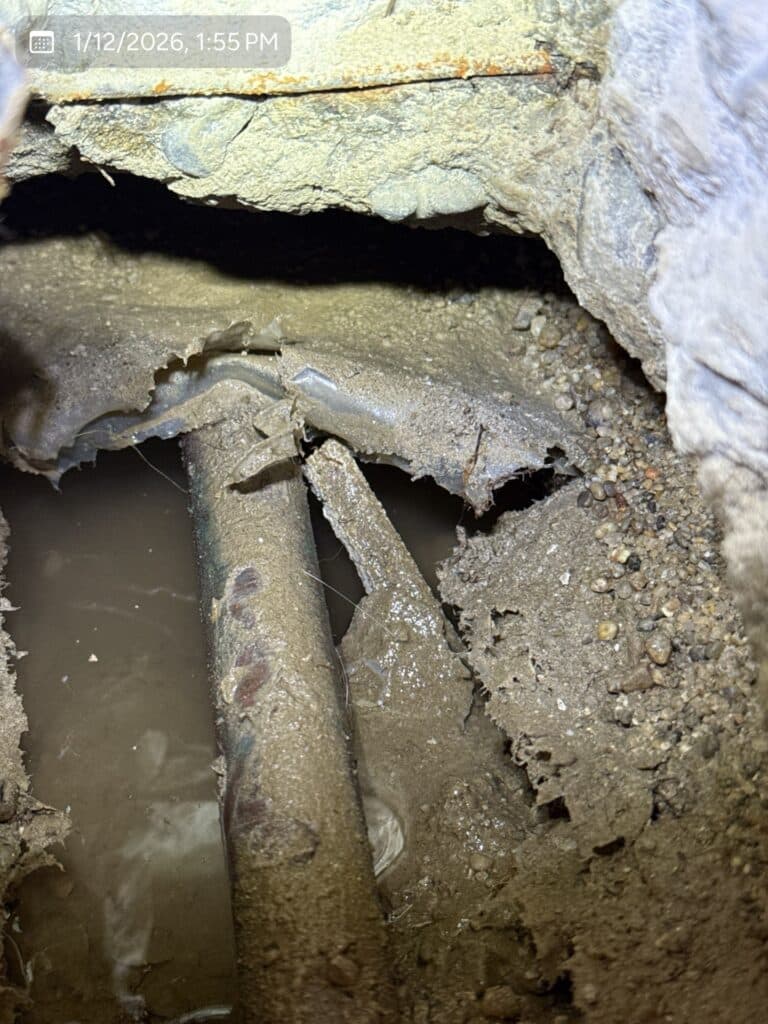
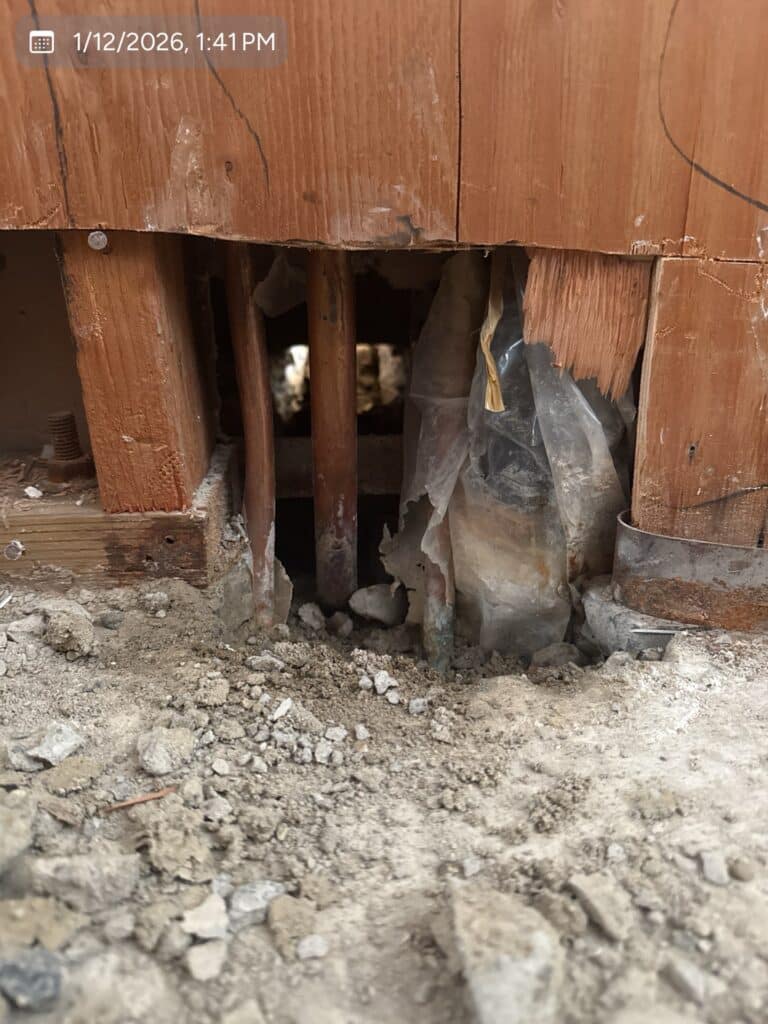
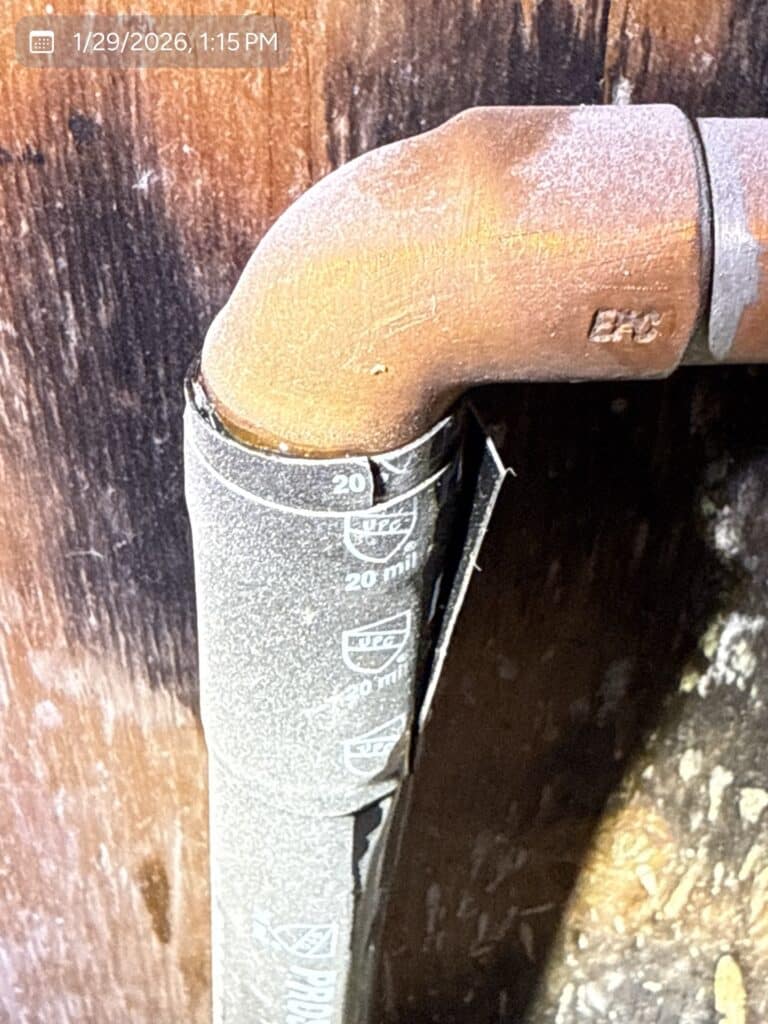
- The damp-proof membrane (vapor barrier) beneath the slab was cut and compromised.
Adjacent Bedroom (Behind Vanity)
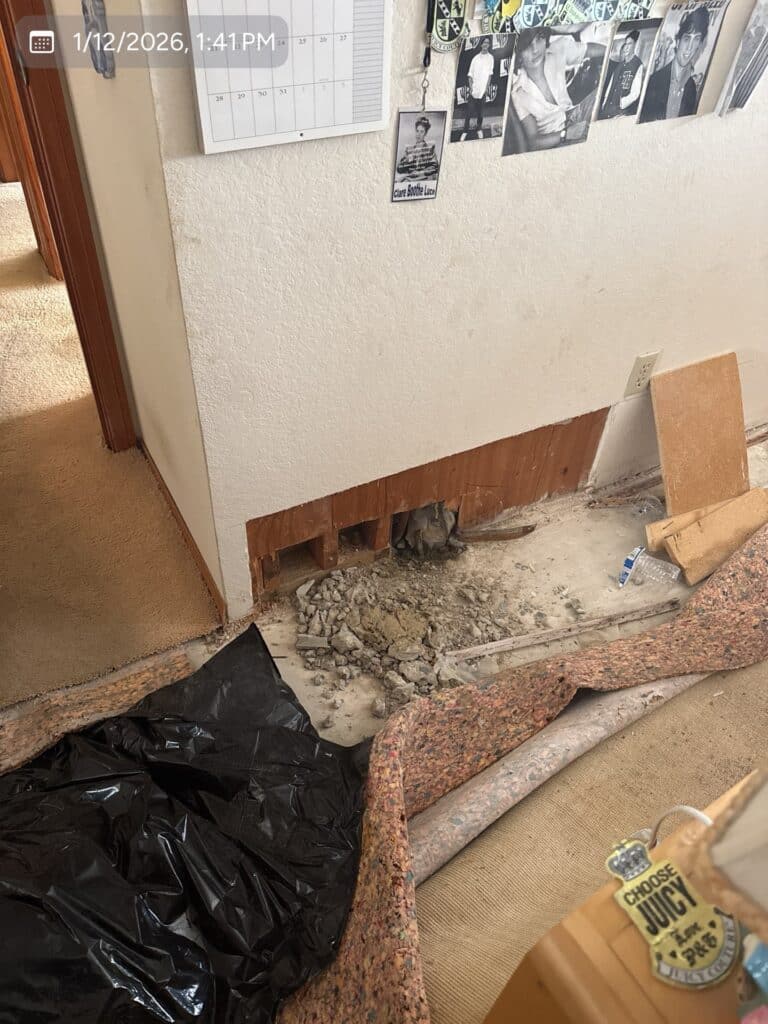
- A smaller jackhammer access hole was created.
- This was reportedly where the plumber performed the “repair.”
The leak, however, was still active.
What Was Actually Going On — And Why It Matters
This job strongly suggests the prior contractor was chasing water and guessing, rather than locating the leak using structured diagnostic methods.
Key Technical Reality (Simple Explanation)
In slab-on-grade homes:
- Water lines enter through the slab.
- They quickly transition beneath the concrete.
- They typically travel along or near the vapor barrier toward fixtures.
That means:
- A “leak in the concrete itself” is not a typical diagnosis.
- Jackhammering at a slab penetration without pinpointing the leak first can:
- Damage the pipe
- Create a new leak
- Worsen an existing leak
When a repair is buried immediately, no one can verify:
- What was leaking
- Whether it was the primary failure
- Whether the repair was appropriate
- Whether it was even necessary
Why the Prior Claim Is Difficult to Reconcile
The sequence presented to the homeowner raises serious technical concerns.
A contractor without specialized leak detection equipment:
- Claims to find a tiny leak at or near a slab penetration
- Performs extensive demolition
- Buries the repair
- Fails to resolve the primary leak
Meanwhile, flooding continues.
More plausible explanations include:
- The pipe was damaged during demolition and then “repaired.”
- A minor issue was found that was unrelated to the main leak.
- Trial-and-error demolition was performed until confidence or direction ran out.
Each of these outcomes is preventable with proper leak detection methodology.
How This Should Have Been Approached
This was a single-story home with accessible manifold access — one of the most favorable diagnostic scenarios.
The proper approach would have included:
- Isolation and verification of the leaking line.
- Non-invasive pinpointing before any demolition.
- Repair planning that minimized structural damage.
In many slab cases like this, a reroute is often:
- Less destructive
- More permanent
- Safer for the vapor barrier
- Less expensive in total restoration cost
Why the Customer Harm Was Severe
Permanent Structural Damage
- Tile floor destroyed unnecessarily.
- Vapor barrier cut and permanently compromised.
- Slab trenching created additional repair complexity.
Once a vapor barrier is cut beneath a slab, it cannot simply be “restored.”
This increases long-term moisture risk.
Escalated Disruption
Interior jackhammering in a finished home creates:
- Dust contamination
- Noise
- Debris spread
- HVAC contamination risk
- Extended restoration time
Higher Cost — With No Resolution
The customer paid for:
- Major demolition
- A buried repair
- Continued flooding
- A second professional investigation
Large destruction + unverified repair + leak still active =
maximum cost with zero resolution.
Additional Irony: The Real Leak Location
The plumber reportedly pointed toward a bathroom area.
However, the true leak corresponded more closely to a bedroom area under carpet.
If demolition had been necessary (which often it is not):
- Concrete patch + carpet can frequently be re-laid.
- Tile flooring is rarely salvageable.
- Restoration costs in tiled areas are dramatically higher.
The chosen demolition area amplified the financial harm.
Why This Case Supports the Need for Regulation
This case illustrates exactly why leak detection must be treated as a diagnostic specialty, not a casual add-on service.
Without standards or credentialing:
- Plumbing companies market “leak detection.”
- Trial-and-error demolition is performed.
- Pipes can be damaged during exploratory work.
- Repairs may be buried without verification.
- Customers are left with restoration bills and unresolved leaks.
Leak detection requires:
- System isolation methodology
- Acoustic training
- Subsurface behavior knowledge
- Structured diagnostic process
- Ethical documentation standards
Owning plumbing tools does not qualify a contractor to perform this work.
Final Takeaway
This was not a complex leak.
It was a simple slab system with accessible manifold control.
The destruction occurred not because the leak was difficult —
but because it was approached without proper methodology.
The result:
- Destroyed tile
- Compromised vapor barrier
- Buried repair
- Leak still active
This case reinforces the urgent need for:
- Industry standards
- Credentialed leak detection specialists
- Mandatory documentation practices
- Consumer protection safeguards
Leak detection is a diagnostic discipline.
When it is treated as guesswork, homeowners pay the price.