
Self-Plugging Water Service Leak Following System Depressurization
Case Type: Rare / Anomalous
Outcome: No active leak present at time of investigation
Relevance: Consumer protection, industry regulation, and proper leak validation
Performed By: Pegasus Leak Detection
Background & Initial Conditions
The homeowner was out of town and the residence was unoccupied.
No intentional water use was occurring at the property.
The municipal water authority contacted the homeowner after identifying continuous water consumption, a condition that strongly indicates an underground or service-line leak when no occupants are present.
This is a critical starting point:
continuous usage with no occupancy is one of the strongest indicators of a real leak.
Plumber Site Visit & Initial Assumptions
Before engaging Pegasus Leak Detection, the homeowner contacted a plumbing company.
During that visit:
- The plumber opened the water meter vault and observed standing water
- The water meter was actively moving
- The plumber shut the water off at the meter
Based on these observations, the plumber assumed a leak existed.
Important Industry Clarification
Plumbing companies are not leak detection specialists.
- Observing meter movement
- Seeing water in a meter box
- Owning listening equipment
None of these meet any recognized standard for confirming an active leak.
At this stage, no leak validation testing had been performed.
Pegasus Leak Detection Investigation
When Pegasus arrived, the system had already been shut down.
The first step was to restore water service and observe system behavior under controlled conditions.
Key Observations Upon Repressurization
Several immediate findings contradicted the assumption of an active leak.
1. No Line-Fill Noise
Normally, when a system with a leak is shut down:
- Water drains out through the leak
- Upon repressurization, the system must refill
- This produces audible line-fill noise
No line-fill noise was present.
This absence was immediately anomalous.
2. No Meter Movement
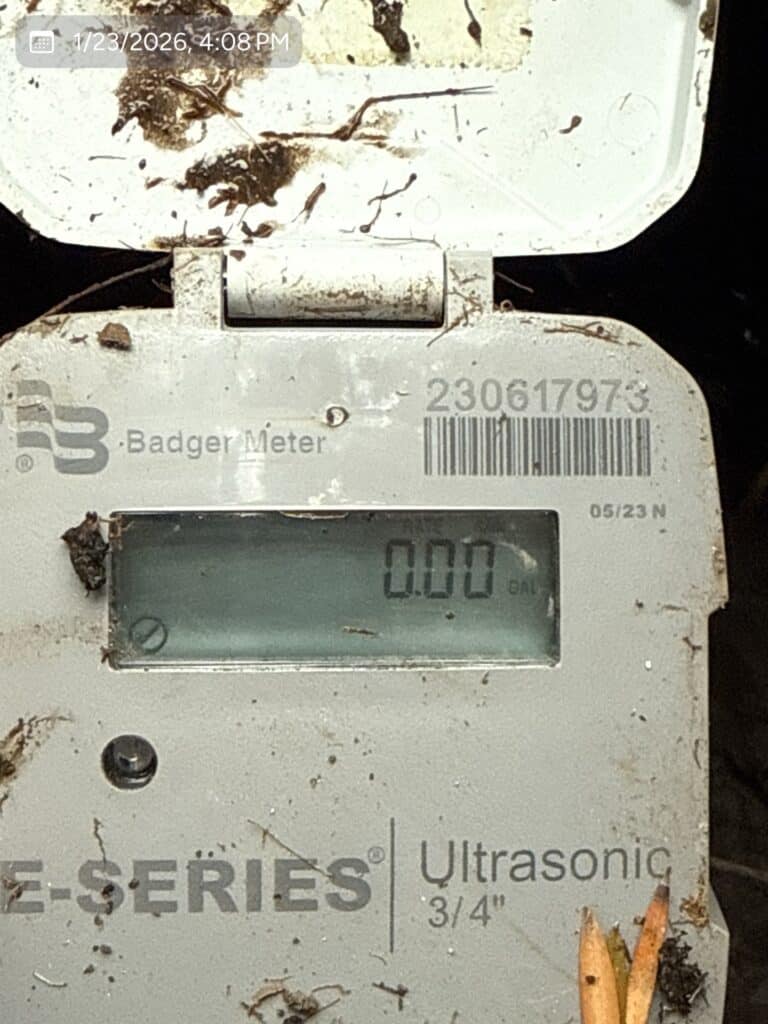
- With the system fully pressurized, the water meter remained still
- The meter vault was damp but never flooded
- No standing water accumulated during the entire site visit
3. Ultrasonic Testing Results
Pegasus deployed ultrasonic leak detection equipment across:
- The service line
- The plumbing system
No acoustic leak signatures were detected.
At this point, all real-time indicators conflicted with the earlier assumption of an active leak.
Hydrostatic Pressure Test — Code-Recognized Validation
To conclusively determine leak status, Pegasus performed a hydrostatic pressure test — the only method recognized by plumbing codes to validate whether a closed system is leaking.
Test Procedure
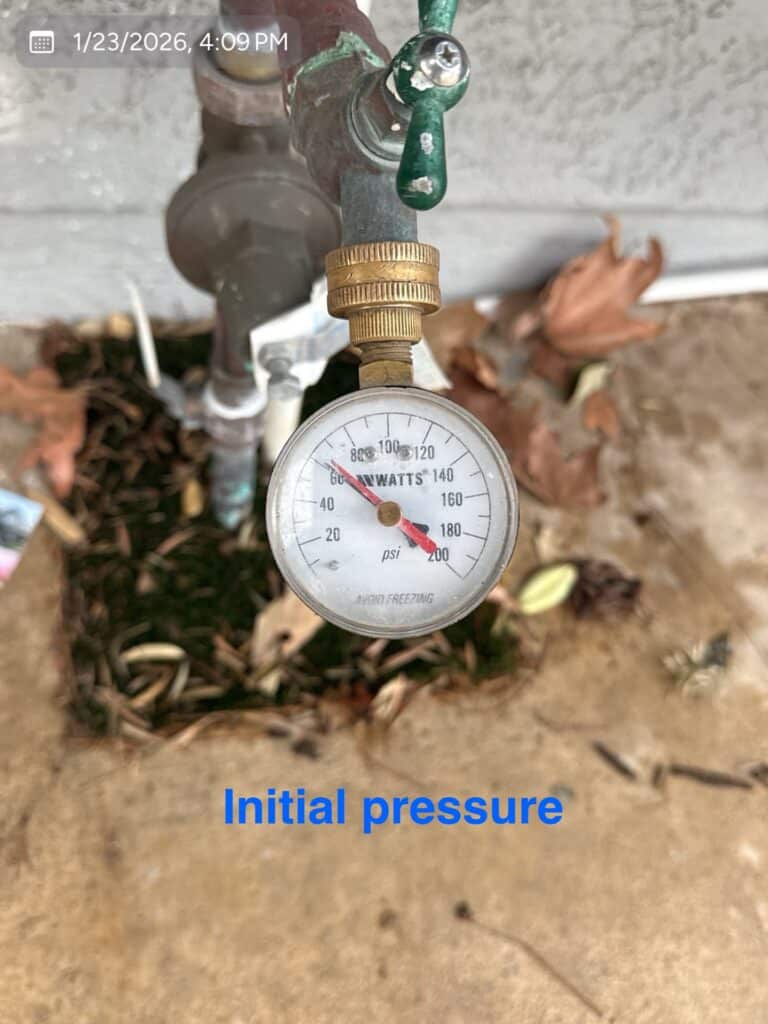
- Static pressure measured at approximately 60 PSI
- City supply shut off
- System isolated and monitored
Results
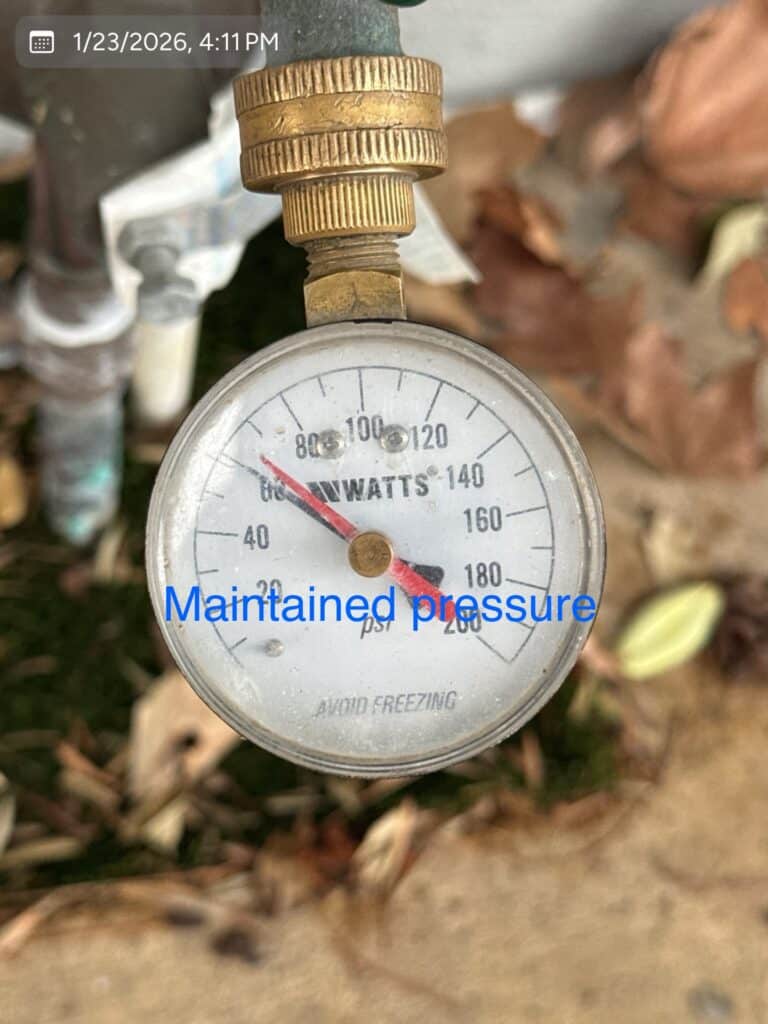
- After approximately 3 minutes, pressure remained completely stable
- No pressure decay was observed
This alone strongly indicated no active leak.
However, we went further to eliminate all doubt.
Control Test: Verifying Test Accuracy
To validate the gauge, shutoff, and testing method:
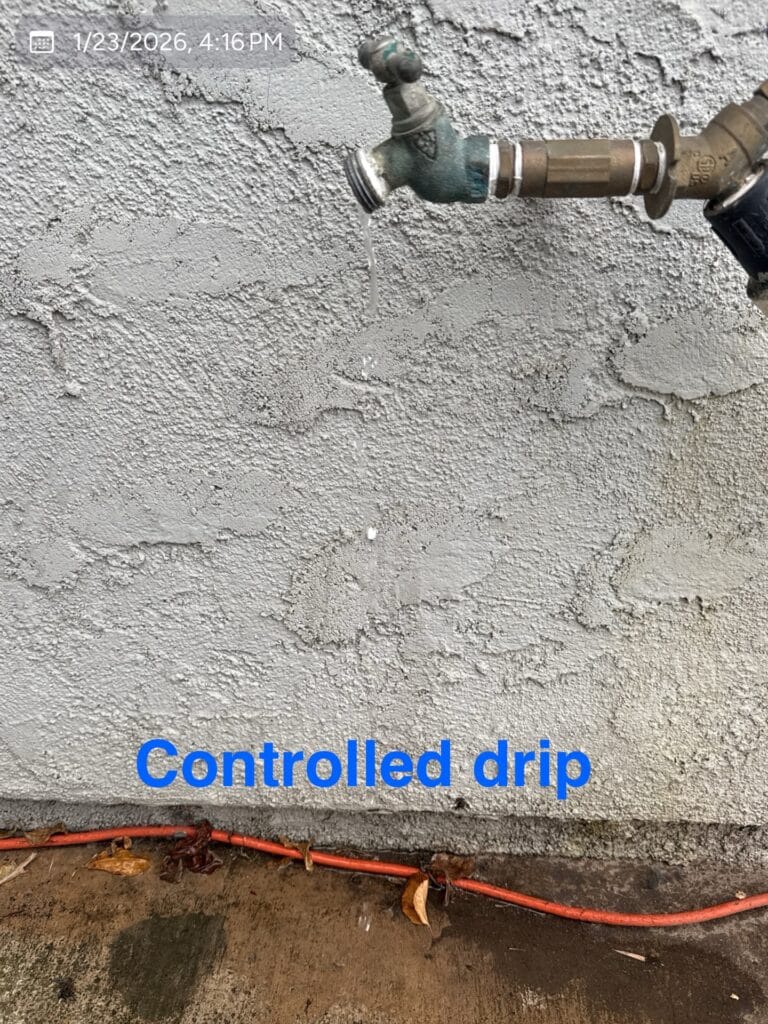
- A backyard hose bib was accessed
- The valve was barely opened to create a slow, consistent drip
Technical Clarification
A slow drip:
- Operates at lower pressure and volume than most underground leaks
- If a system can detect a drip, it will absolutely detect a leak
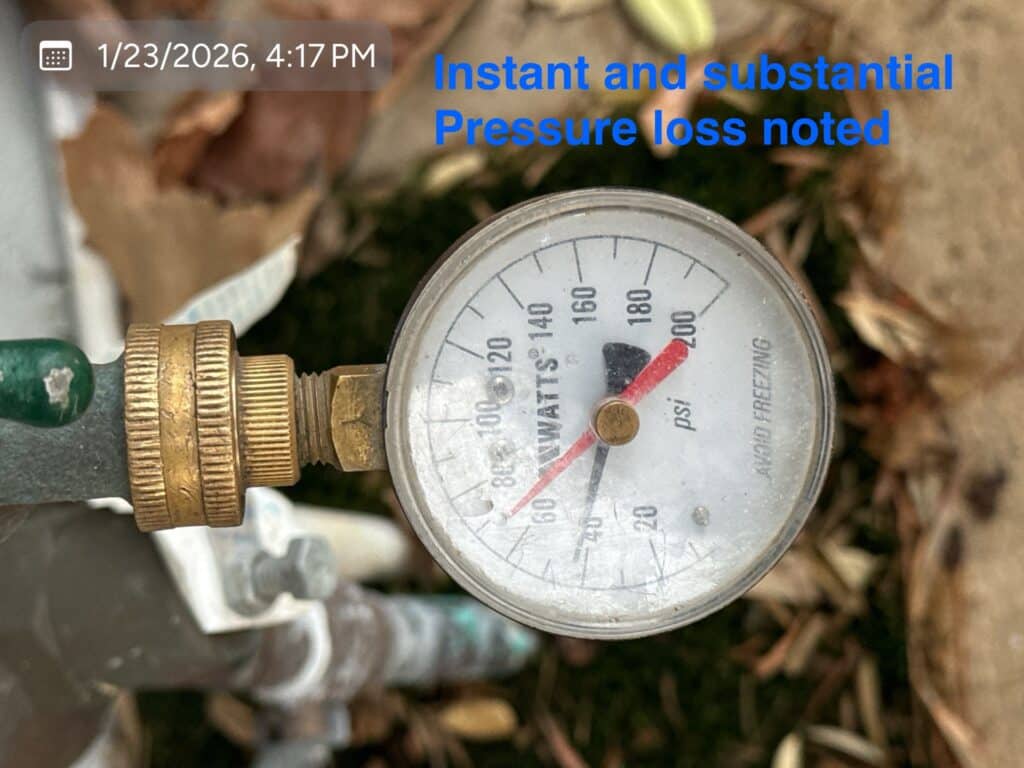
Control Test Results
- After shutting the supply again, pressure loss was immediate
- In the ~5 seconds it took to walk from the meter to the gauge, the system lost approximately 20 PSI
This confirmed:
- The gauge was accurate
- The shutoff valve was sealing
- Even minimal water loss produces rapid, measurable pressure decay
Final Determination
At the time of inspection:
- No active leak existed
- The system conclusively held pressure under isolated conditions
However, based on earlier verified indicators, Pegasus determined:
This Was a Legitimate Leak That Self-Sealed
Supporting Evidence for a Self-Sealing Event
- Municipal confirmation of continuous consumption with no occupancy
- Standing water and meter movement observed prior to shutoff
- Leak indicators that ceased only after system depressurization
Likely Cause: System Depressurization (Rare Event)
This phenomenon is extremely uncommon, but when observed, it almost always follows system depressurization.
When water is shut off:
- Mineral scaling and calcification can expand and bridge small cracks
- Sediment and particulate matter can mobilize and lodge into openings
This is the same mechanism that explains why water often turns brown after service interruptions.
In rare cases, this material can temporarily seal a leak.
Why This Case Is Difficult — but Necessary to Publish
Publishing this case carries inherent risk.
Bad actors or underqualified technicians may attempt to misuse the phrase
“the leak plugged itself” as an excuse for:
- Failing to locate a leak
- Skipping diagnostics
- Avoiding accountability
Critical Clarification
This conclusion is only valid when supported by:
- Documented hydrostatic pressure testing
- Verified isolation
- Control testing confirming accuracy
This case must never be cited without data.
Consumer Warning & Industry Reform Message
Self-plugging leaks are extremely rare.
Any contractor making this claim must provide:
- Documented pressure test results
- Isolation data
- Verification that instrumentation is functioning
Consumer Guidance
If a homeowner is told:
“The leak fixed itself”
We strongly recommend:
- Obtaining a qualified second opinion
- Reviewing documented test results
- Contacting a dedicated leak detection firm — not a plumbing contractor marketing leak detection
Pegasus provides a free second-opinion consultation for cases involving disputed or unclear leak diagnoses.
Why Industry Regulation Matters
This case illustrates why:
- Leak detection should be a regulated, standards-based trade
- Plumbing contractors should not self-certify as leak detection specialists
- Objective testing protects consumers from:
- Unnecessary excavation
- Inflated costs
- Misinformation
Without standards, consumers are left vulnerable to assumption, guesswork, and—in some cases—fraud.
Closing Statement
This case was published not to excuse failure, but to:
- Educate the public
- Demonstrate proper validation methodology
- Expose the limitations of unqualified diagnostics
- Advocate for meaningful industry reform
This is not a loophole.
This is an exception — proven with data.